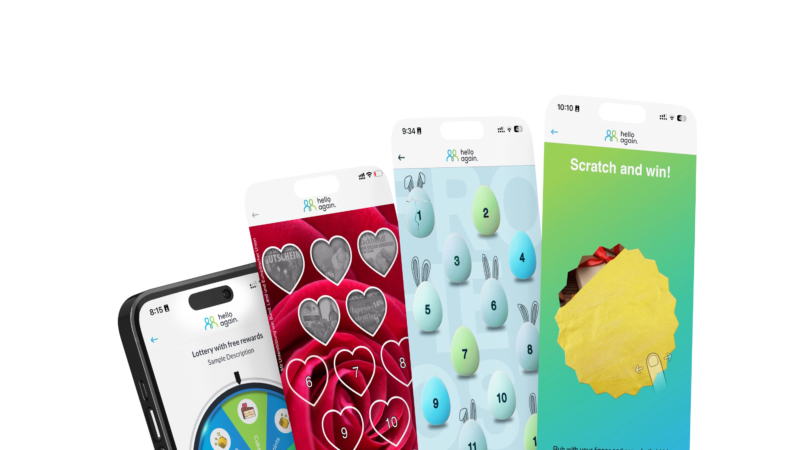


The mechanics are in place, the rewards are defined, and the technology is up and running. Now, the communication surrounding the launch of your loyalty program will determine whether it’s actually used. After all, most programs fail not because of the idea itself, but because of how they’re introduced. And a successful launch requires a solid plan—without one, even a large budget won’t help.
Who will find out about your program, when, and through which channel? How will employees be prepared? And what will happen in the first few weeks after the launch? That’s exactly why we’ve put together a 30-day plan for your launch communications —from internal preparation to the first wave of engagement.
Why the Launch Is Key to Success
A loyalty program may be technically perfect, but if no one knows about it, it’s completely useless. According to the DACH Loyalty Report 2026, 81.3 % of respondents use digital rewards programs. The willingness is there, but customers won’t sign up on their own—your program must first be visible and provide clear incentives to your customers.
| factor | Why It Matters |
|---|---|
| Visibility | Customers must be aware of the program at every touchpoint |
| Clarity | The mechanics must be explainable in 30 seconds |
| Immediate Benefits | A welcome bonus significantly lowers the barrier to signing up |
The 30-Day Launch Plan
Week 1: Internal Briefing
Before a single customer learns about the program, your team must first be prepared. Plan a kick-off event—for example, a group meeting to introduce the program and answer questions—as well as a one-page overview sheet with the three most important points and an internal FAQ for common questions. Also, set a specific sign-up goal for the first 30 days.
Week 2: Advance Notice
Existing customers should be the first to know what’s coming. A teaser via email, one or two social media posts, and point-of-sale materials at the checkout build anticipation and pique curiosity even before the program officially launches.
Week 3: Launch
Launch day and the first week afterward are the most intense phase. A launch email, active POS outreach, and a visible QR code at all touchpoints generate the most sign-ups when communication is effective.
Week 4: Reactivation
The most critical phase: Many programs lose momentum after the initial hype. An automated onboarding series, an initial score reminder, and a short feedback survey determine whether sign-ups turn into active users.
The Right Channels for Your Launch
According to the DACH Loyalty Report 2026, 71.5 % prefer digital channels for information, while 28.5 % still value print. Personal interaction at the checkout outperforms all digital channels in terms of conversion rate, while email and social media provide additional reach. So make sure you have a good mix of all channels (omnichannel strategy) that you can utilize.
| Channel | Best for |
|---|---|
| POS / Cash Register | All industries with brick-and-mortar stores |
| Email / Newsletter | Advance Notice, Launch, Onboarding |
| Push Notifications | Score Updates, Promotions, Reminders |
| Social Media | Pre-announcement, Launch, Social Proof |
| QR Code (physical) | Place cards, displays, receipts |
Common Launch Mistakes and How to Avoid Them
- Team not prepared: Schedule an internal briefing at least one week before the launch.
- Communicating too much at once: One message per communication; the rest will follow in the onboarding series.
- No welcome bonus: A small perk right after signing up makes all the difference.
- Communication doesn't end on launch day: The first 30 days after the launch are at least as important as the launch itself.
- Use only one channel: The combination of in-store engagement, email, and the app yields the highest conversion rate.
Complete Launch Checklist
- Briefed the team and distributed the overview sheet
- Welcome Bonus Defined and Configured
- Onboarding series with three messages prepared
- POS materials printed and displayed
- Teaser emails and social media posts scheduled
- Registration goal set for the first 30 days
- Key Metrics Defined: Sign-up Rate, Active Users, Redemption Rate
- Initial results from Week 4 analyzed
What Remains Important After the Launch
New members need a clear welcome campaign during their first few days so that their initial enthusiasm doesn't fizzle out. And a well-designed app onboarding process ensures that downloads translate into actual usage. Measure success based on sign-ups, activation rates, and the redemption rate of the welcome bonus; read more in the article Measuring Customer Retention.
Conclusion
A successful launch isn't a matter of chance—it's a clearly structured process. Prepare your team, communicate through multiple channels, and stay on top of things after the launch. Investing in a smooth start pays off throughout the entire program: more sign-ups, higher activation rates, and more sustained usage.
Frequently Asked Questions
How many sign-ups should I expect in the first month?
That depends on the size of the industry and customer traffic. As a general guideline: A store with 100 customers per day that actively engages customers at the POS can realistically sign up 30 to 40 % walk-in customers in the first month. Set a specific goal before you start and track the sign-up rate daily.
Do I have to make a big deal out of the launch?
No, a launch doesn't have to be expensive. A clear communication plan, well-prepared employees, and a good welcome bonus are all you need. Consistency over the first four weeks is more important than a big event.
Which channel generates the most sign-ups?
Personal interaction at the point of sale outperforms all digital channels in terms of conversion rate. Email and social media are still important, however, as they help reach customers who aren’t currently in the store. The best strategy is to combine both approaches.
What should be included in the first message to new members?
Three things: a brief, personal greeting, a one-sentence explanation of how it works, and the welcome bonus. Keep the first message under 100 words; details will follow in the next messages of the onboarding series.
How can I motivate my team to actively promote the program?
Explain why the program is important, make giving the presentation easy by using a cheat sheet, set a team goal, and celebrate milestones. Recognition is much more effective than pressure in this context.
What should you do if registration numbers plummet after the launch?
That's normal—the initial hype always dies down. What matters is that the onboarding series is running, regular push notifications serve as reminders, and monthly promotions provide new momentum. If numbers are stagnating, check to see if the team is still actively reaching out and if the QR code is visible everywhere.
How do I measure the success of the launch?
Five key metrics can help: number of sign-ups, activation rate, welcome bonus redemption rate, open rate for onboarding messages, and qualitative feedback from a short survey. A dashboard displaying these metrics gives you the foundation you need to make targeted optimizations in Week 5.