

Customer loyalty is more important than ever. But what customer loyalty tools are actually available—and how do you use them effectively?
In this post, we'll walk you through the basics of the most important customer loyalty tools you can incorporate into your strategy. After all, effective customer loyalty initiatives lead not only to more satisfied customers but also to more profitable customer relationships.
Why use customer loyalty tools in the first place?
Every business understands the value of repeat customers. A small portion of your regular customer base often accounts for a large portion of your future revenue. Every business should therefore set a goal of strengthening customer loyalty—and thus increase customer satisfaction and revenue in the long term.
Below are specific examples and steps you can take to build long-term customer loyalty and proactively align your strategy with this goal.
We’ll cover exactly what customer loyalty is and how important it is to keep existing customers satisfied in a separate post. This post focuses on the various customer loyalty tools—we distinguish between traditional and digital options.
Types of Customer Loyalty Tools
Customer loyalty should be a top priority and firmly embedded in the company through an appropriate strategy—one that elegantly brings together the provider, the offering, and the customer base. It unites departments such as Sales, Marketing, Logistics, and Quality Management.
Companies of all sizes have been implementing customer loyalty programs for years. Just as the market, your customers, and the technologies used are constantly evolving, so too are the possibilities for customer loyalty. Here you’ll find an overview of the most established customer loyalty tools for your strategy.
Traditional customer loyalty tools
These classic customer loyalty tools are among the pioneers of customer loyalty. They’ve been around for a long time, and they’re still relevant—only the way they’re implemented has changed.
- Customer service
- Bonus systems
- Customer feedback
- Customer Journey Management
- Referrals
1. Customer Service
Excellent service is essential for strong customer loyalty—it shows your customers that they are a top priority for your business. It’s crucial that customers have the option to contact you at every stage of the customer relationship: before the purchase, while making the purchase decision, and, above all, afterward.
So find out what problems your customers typically face, and make the right solutions easily accessible. The less effort it takes to get help, the stronger the customer loyalty will be.
One often-overlooked aspect of this is complaint management, as many companies deliberately avoid dealing with complaints. Yet dissatisfied customers can be won back by handling their criticism professionally—they are often more loyal afterward than before and strengthen your brand through word of mouth. In addition, complaints provide valuable insights for the further development of your products and processes.
2. Bonus Systems
Rewards programs have been around for years, and they offer a cost-effective marketing opportunity for any business. They come in many forms, ranging from a simple stamp card at a coffee shop to a complex frequent flyer program offered by an airline.
But the goal always remains the same: to build long-term customer loyalty to your business.
In most cases, reward programs encourage your customers to collect points. They can later redeem these points for benefits, discounts, or prizes. A recent trend in reward programs incorporates game mechanics from video games, known as gamification.
However, the underlying principles had already been applied before that, for example in Lufthansa’s „Miles and More“ bonus program.
The goal is to help customers earn points and advance in status in a fun and engaging way. In video games, such mechanics create an emotional connection.
These include, among other things, leaderboards, levels, challenges, and points that customers can achieve or earn.
3. Feedback
It’s essential to understand why some customers remain loyal while others leave your business. Direct customer feedback is a valuable source of insight for this.
This is how you actively involve customers in your business development. At the same time, their feedback provides you with valuable insights for further development of individual processes.
To do this, set up feedback channels through which customers can actively share their ideas and comments. Responding quickly and professionally—whether by phone, email, or social media—is the key to building customer loyalty.
4. Customer Journey
The customer journey describes the stages and touchpoints that customers go through before deciding to purchase your product or service. However, it also extends beyond the purchase itself.
Touchpoints are all the points of contact where someone interacts with your brand. In customer journey mapping , you assign all touchpoints to the individual phases.
Optimize these touchpoints to provide your customers with the best possible experience throughout the decision-making process.
5. Referrals
Referral Marketing is a method in which existing customers are encouraged to make referrals—and thereby bring in new customers. In German-speaking countries, this is also known as a “customer-referral program.”.
One key factor is offering attractive rewards for successful referrals. If your customer journey is optimized and your customers are satisfied, this method can lead to strong growth in new customer acquisition.
Digital customer loyalty tools
In addition to traditional offline channels, digital transformation offers new ways to build and strengthen relationships between companies and customers. When used correctly, it holds great potential.
- CRM Systems
- The Digital Customer Card
- Customer Engagement
- Push Notifications
- Email Marketing
1. CRM systems (Customer Relationship Management)
At the heart of digital customer loyalty is usually a CRM system (Customer Relationship Management system). It helps you nurture customer relationships and simplifies your overall customer loyalty management.
A successful implementation helps you store all your customers’ important data in one central location. This allows you to better understand your customers and keep track of their entire history.
A CRM system also helps you identify loyal customers and analyze their purchasing behavior. This allows you to increase revenue from this group through targeted activities.
By the way, this also increases the satisfaction of your regular customers because it makes them feel valued. You can find out how to further automate these processes in a separate post.
2. The digital loyalty card
The loyalty card is a classic customer retention tool. When used correctly, it offers your customers real added value that influences their purchasing decisions.
The traditional plastic card is increasingly being replaced by the digital loyalty card—and for good reason. Among the biggest advantages are easier use, a simpler registration process, and less plastic waste.
You can find a detailed comparison between digital and analog loyalty cards in a separate post.
3. Customer Engagement
Direct communication with your customers has a positive impact on satisfaction and customer loyalty. New platforms and technological advances make it easy for companies to connect with their target audience.
Through channels such as social media or apps , you don't just interact personally with your target audience—you also collect valuable data for your online marketing.
Interaction through digital channels and social media boosts both satisfaction and customer loyalty—because it makes customers feel valued.
4. Push notifications
The smartphone is our everyday companion—and offers companies new opportunities to connect directly with customers. Push notifications are easy to implement and cost-effective.
These are notifications that appear directly on your users' screens via an app. Thanks to their high open rates , they are often more effective than traditional marketing emails.
Good timing is the key to success. It makes the difference between useful memories and distracting interruptions.
Think about which notifications are helpful at what times, and keep optimizing them. Automated push notifications that are triggered under specific conditions are particularly effective.
5. Email Marketing
Even though most people receive a flood of emails every day, email marketing remains an effective way to build customer loyalty and attract new customers. You can collect email addresses, for example, through a website form, a contest, or a personalized loyalty app .
Your email campaigns offer the opportunity to communicate directly with your customers. As with push notifications, timing is often key.
Automated, personalized emails are useful, for example, when some of your customers haven't made a purchase in a while. Birthday greetings and promotional offers can also be sent automatically this way.
| Instrument | Type | A Quick Explanation |
|---|---|---|
| Customer service | Classic | Fast, friendly service throughout the customer journey |
| Bonus systems | Classic | Earn points for rewards or bonuses |
| Customer feedback | Classic | Use Direct Insights to Drive Further Development |
| Customer Journey Management | Classic | Optimize touchpoints along the customer journey |
| Referrals | Classic | Existing customers refer new customers |
| CRM Systems | Digital | Store and Use Customer Data Centrally |
| Digital Customer Card | Digital | A simple, paperless alternative to a plastic card |
| Customer Engagement | Digital | Direct Interaction via Social Media & Apps |
| Push Notifications | Digital | Short, targeted notifications via the app |
| Email marketing | Digital | Automated, personalized communication via email |
Conclusion: Customer loyalty through the app
There are many ways and tools for building customer loyalty—whether traditional or digital. Customer loyalty should be a top priority in every business strategy, because it’s always more cost-effective to encourage existing customers to make repeat purchases than to acquire new ones.
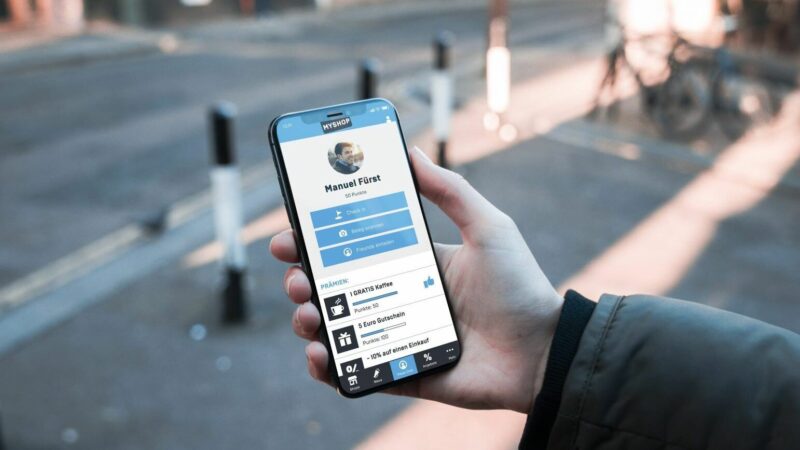
The best way to reach your existing customers is directly through their smartphones—using a personalized customer loyalty app.
Your custom loyalty app is tailored entirely to you and your company's goals. It combines all the traditional and digital tools mentioned here—and thus also complements the Top 5 Customer Loyalty Strategies, which we’ll introduce to you in a separate article.
FAQ: Frequently Asked Questions About Customer Loyalty Tools
What are customer loyalty tools?
Customer retention tools are strategies and measures that companies use to retain their customers over the long term. These include traditional tools, such as customer service and reward programs, as well as digital tools, such as CRM systems and push notifications. Both types can be effectively combined.
What is the difference between traditional and digital customer loyalty tools?
Traditional tools such as customer service, bonus programs, and referral programs have been around for a long time and often work offline. Digital tools such as CRM systems, digital loyalty cards, and push notifications use technology to achieve the same goals more efficiently and in a more personalized way. Many companies today combine both approaches.
Why is the customer journey important for customer retention?
The customer journey maps out all the stages and touchpoints that customers go through before making a purchase—and afterward. By understanding and optimizing these touchpoints, you can provide your customers with the best possible experience throughout the entire decision-making process. This significantly strengthens customer loyalty.
How is a CRM system used for customer retention?
A CRM system (Customer Relationship Management system) centrally stores all important data about your customers. This helps you better understand your customers, identify repeat customers, and create targeted, personalized offers. This boosts both efficiency and customer satisfaction.
How do push notifications help with customer retention?
Push notifications reach customers directly on their smartphones and typically achieve higher open rates than traditional emails. Timing is key: Only relevant, well-timed messages serve as useful reminders rather than annoying distractions. Automated push notifications make this particularly easy.
Is a single customer loyalty tool enough?
No, a combination of several tools usually works best. A customer loyalty app, for example, can bundle many traditional and digital tools at the same time—from reward programs to CRM to push notifications. This allows you to address your customers’ diverse needs in a targeted way.