

Earn points, redeem points—done? Unfortunately, the math behind customer loyalty isn’t quite that simple. Digital customer loyalty is very much in vogue, and large multi-partner bonus programs such as PAYBACK, DeutschlandCard, and the jö Bonusclub continue to gain ground.
Are you thinking about becoming a PAYBACK partner—or are you more interested in a custom solution that lets your customers easily earn and redeem points? We’ve analyzed the pros and cons of both options and summarized them clearly so you can make the right choice for your business strategy.
What is a multi-partner rewards program?
A multi-partner rewards program is a platform solution in which multiple companies, usually from different industries, participate. Several partner companies are grouped together, and the rewards program operates under its own brand, such as PAYBACK, jö, or DeutschlandCard.
On these platforms, customers earn points that they can redeem for coupons and discounts from the respective partners—for example, PAYBACK points.
The key point here: In a solution like this, your company is just one of many. This has both advantages and disadvantages, which we'll examine below.
What is a company-specific rewards program?
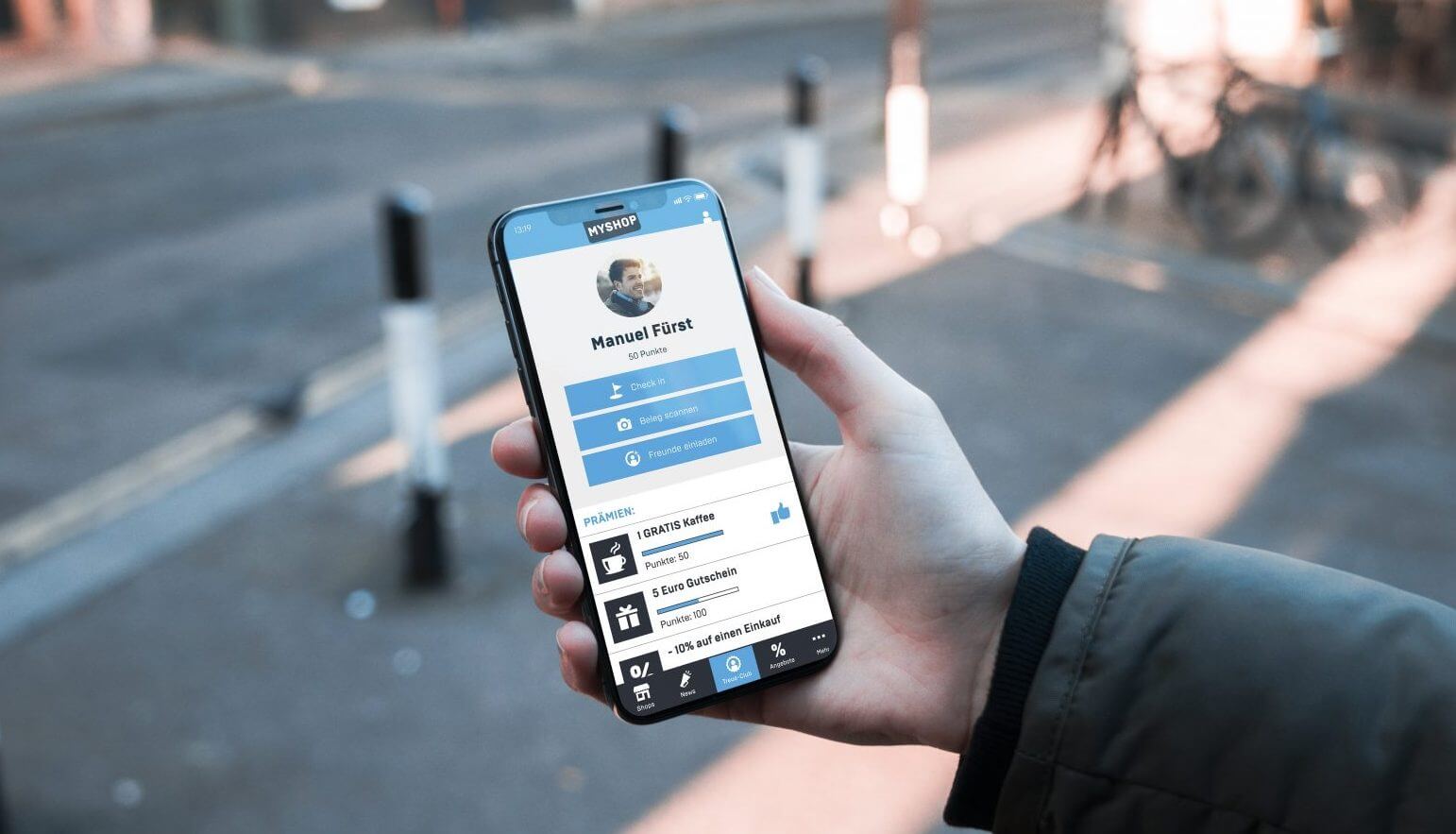
A standalone customer loyalty solution differs from a multi-partner program in that it is created and tailored specifically for your company. It appears under your company's name, and you determine all the content yourself.
Brand strengthening through your own appearance
The company’s „standalone presence“ strengthens the brand, as customers interact directly with the company. This creates a strong branding effect, which is significantly weaker in multi-partner bonus programs—for example, when you become a PAYBACK partner.
Opportunities in digital customer loyalty
Digitalization is advancing by leaps and bounds, and it doesn't stop at customer loyalty. The latest DACH Loyalty Report shows why digital customer loyalty ensures your future success and how consumers in the DACH region really behave.
Provider Details: The Key Differences Between Loyalty Programs
Behind successful customer loyalty lies a well-thought-out strategy—whether it’s a multi-partner solution like PAYBACK or the jö Bonus Club, or a proprietary solution. But what are the key differences you should consider when choosing between the two options?
PAYBACK Partner vs. Individual solution: Infrastructure & Implementation
As a DeutschlandCard, jö, or PAYBACK partner, you’ll be using an existing platform with established infrastructure. You can easily integrate your business into the existing structures, which makes implementation relatively quick.
If you choose to develop your own solution, you have two options: having it implemented by a marketing agency or using internal resources (which is rarely the case), or partnering with a specialized IT service provider. While the first option is time- and resource-intensive, a white-label solution, such as the one from hello again, can absolutely compete with multi-partner platforms in terms of time and cost—while offering significantly more design freedom, since there are virtually no limits to the customization of features with an in-house solution.
PAYBACK Partners vs. Custom Solutions: Marketing & Branding
With PAYBACK, jö & Co., the platform itself can be used as a marketing channel, since it already has an established customer base. This helps potential customers become aware of offers and may turn them into new customers. However, this often requires an additional advertising budget, and competition arises among partners for customers’ attention.
If you opt for a custom solution, you’ll also need a budget for marketing activities within the customer loyalty program—but there are virtually no limits to the promotional possibilities, especially with popular gamification and rewards elements, there are virtually no limits. Another advantage: your company’s corporate identity can be fully incorporated, whether in the app icon on the home screen or in custom names for bonus points, as major brands have long been doing. If, on the other hand, you partner with PAYBACK & Co., you’ll be represented in the app „only“ by your logo—a significantly smaller branding impact.
PAYBACK Partner vs. Custom Solution: Communication with Customers
With a personalized solution, you connect directly with your customers. This allows you to address their individual needs, requests, and concerns. Through automated, direct communication, you can reach your customers through various channels: social media, email, newsletters, push notifications, or text messages.
With platform solutions, this kind of direct communication is often only possible to a limited extent—and usually for an additional fee. This results in a loss of flexibility, and you become more dependent on the platform and other partners. Customers are particularly sensitive when it comes to push notifications: if too many irrelevant messages are sent, they’ll quickly disable them—and on a platform, this affects all merchants equally. That’s a clear drawback in terms of independence.
PAYBACK Partner vs. Custom Solution: Customer Data & GDPR
The main reason many companies are interested in loyalty programs is to collect valuable, high-quality customer data in order to get to know their customers, understand them, and provide personalized service. Data is collected in both cases—the big difference lies in who manages this data and who has access to it.
With your own solution, you decide for yourself what data is collected and how you use it. Multi-partner solutions like PAYBACK, jö, or DeutschlandCard do not share all data with their partners—which means you have no control over how and for what purposes data is collected. It’s safe to assume that all platform operators handle customer data in compliance with the GDPR, but a negative perception of the platform can also reflect poorly on your own company.
PAYBACK Partner vs. Custom Solution: Costs
The costs of implementing and operating a customer loyalty program vary widely and depend on several factors. Here is a brief overview:
- Setup (one-time): For a platform-based solution, this includes integration into the existing system; for a custom solution, the costs depend heavily on the specific scope and desired features.
- Ongoing Fees: Both models involve recurring costs, which are often based on the number of active customers rather than revenue.
- Further Development: An in-house solution can be further developed at any time. Innovations and trends such as gamification can be incorporated to keep the program appealing in the long term—though one-time costs are incurred for each round of further development.
- Marketing Activities: With an in-house solution, push notifications, automated emails, and newsletters can usually be implemented at no additional cost. With a multi-partner program, however, additional fees—whether recurring or one-time—are often charged for these features.
It’s important to consider all cost components over the long term: The more you want to engage with your customers through the loyalty program, the higher the marketing costs will be for a platform-based program. If you simply want to allow customers to collect points, setup costs and recurring fees will be the main factors to consider when making your decision.
Multi-partner platform vs. custom solution
Which of the two options is right for your business depends on your specific needs. The biggest difference: As a partner of PAYBACK, jö, DeutschlandCard, and others, your loyalty club is integrated into an existing program, whereas with a custom solution, you build your own community.
The differences mentioned above serve as a decision-making guide for companies that have recognized the importance of customer loyalty. Some companies even opt for a mix of both approaches: H&M is part of the DeutschlandCard multi-partner rewards program and, at the same time, has launched its own highly successful customer loyalty program. Perhaps that’s exactly the right solution for you, too: having both.
Conclusion
Becoming a PAYBACK partner gives you quick access to an existing platform and a large customer base—at the expense of branding, data ownership, and freedom of communication. A proprietary solution requires more attention at first, but it’s entirely yours: your branding, your data, your rules.
Which option is right for you depends on how important having your own brand, direct customer relationships, and full control over your data are to you. Quite a few companies find that a smart combination of both works best for them.