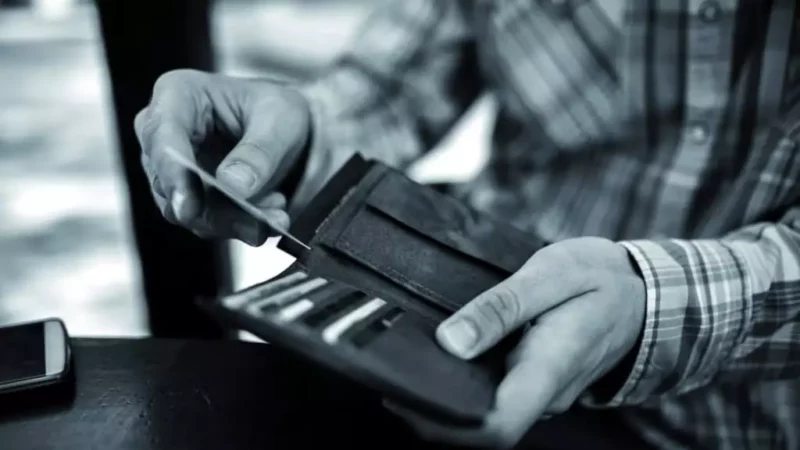


Most stamp cards are never redeemed. They’re handed out, stamped once or twice, and then misplaced—so customers never get their free coffee, and customer loyalty never materializes. The concept itself isn’t bad; it’s just that the medium is outdated.
Digital loyalty apps turn that on its head: You can't lose the card, your progress is visible at all times, and you can see who actually comes in regularly and what they buy from you.
Unlike a stamp card, however, there are monthly costs involved, and you’ll need to encourage your customers to install the app. The decision between a stamp card and a loyalty app is therefore no longer a matter of principle, but a matter of cost.
In this article, we'll compare the two systems. To do so, we'll break down the costs, the effort involved, and our recommendation for each business size.
What exactly is the difference between a stamp card and a loyalty app?
Before we compare them, it’s worth making a clear distinction. After all, stamp cards and loyalty apps aren’t opposites—they represent different levels.
The Stamp Card
A stamp card is a customer loyalty program. Customers receive a stamp with each visit. Once the card is full, they receive a reward. Since it’s a physical paper card, there’s no data and no tracking. In its digital form, the stamp card lives on a smartphone—for example, in the Wallet app—and is scanned via a QR code or at the point-of-sale system.
The Loyalty App
A loyalty app is a comprehensive system for digital customer loyalty. It can include a digital stamp card, but also offers push notifications, a CRM for managing customer data, rewards programs, gamification elements, and a dashboard for analysis.
The key difference: A stamp card is a single mechanism, while a loyalty app is the platform that bundles multiple mechanisms.
Stamp Card vs. Loyalty App: A Comparison at a Glance
| Criterion | Paper punch card | Digital Stamp Card | Loyalty App |
|---|---|---|---|
| Start-up costs | Very low | Low to moderate | Medium |
| Customer Data | None | Basic Information (Name, Email) | Comprehensive |
| Analysis | Not possible | Fundamental | In detail |
| Communication | None | Limited | Push, Email, SMS |
| Personalization | None | Hardly | Yes |
| Risk of Loss | High | No loss | No loss |
| Scalability | Low | Medium | High |
| Variety of Rewards | 1 Mechanics | 1 Mechanics | Can be combined with others |
Five Criteria to Help You Make Your Decision
Not every business needs the same solution. These five questions will help you figure out what you need.
- How often do your customers visit? For daily visits, a simple stamp-based system is sufficient; for less frequent visits, you'll need mechanisms that remain active between visits.
- How complex is your product lineup? A café with three beverage categories doesn't need a ten-level point system, while a retailer with changing product groups benefits from greater flexibility.
- Do you want to use customer data? A paper card provides you with zero data points, while a loyalty app collects valuable data in compliance with the GDPR for targeted communication.
- Do you have multiple locations? Paper stamp cards only work at a single location, while a loyalty app syncs points across all locations.
- What's your budget? Digital solutions often start at just a few euros a month and pay for themselves through higher repeat purchase rates.
Decision-Making Guide by Industry
Not every industry operates the same way. Here you can see which solution typically works best, depending on frequency and communication needs.
| Industry | Visitor Frequency | Recommended Solution |
|---|---|---|
| Café / Takeout | High (daily) | Digital Stamp Card |
| Bakery | High (daily) | Stamp Card or App |
| Gastronomy | Medium (weekly) | Loyalty App |
| Hair Salon / Beauty Salon | Low (4–8 weeks) | Loyalty App |
| Retail (Fashion) | Medium | Loyalty App |
| Food Retail | High | Loyalty App |
| Pharmacy | Medium | Loyalty App |
Common Mistakes When Choosing a Solution
- Paper Is Good Enough: Paper stamp cards have a high loss rate. If the card is lost, all your progress is gone.
- Launch an app, but use it only as a stamp card: An app's strength lies in the combination of stamp logic, push notifications, and analytics.
- Too much complexity at the start: Start with a clear mechanic and expand on it gradually as you see what works.
- No communication after the rollout: If your team at the counter doesn't mention it, nobody will use it.
Checklist: Which solution is right for you?
Go through the following points. The more questions you answer “Yes” to, the more worthwhile a full-featured loyalty app will be.
- My clients come less than once a week.
- I have more than one product or service that I'd like to promote.
- I'd like to know who my regular customers are.
- I want to actively reach out to customers between visits.
- I have seasonal promotions or rotating offers.
- I operate multiple locations or plan to expand.
- I'd like to combine different reward mechanisms.
- I want to be able to measure and evaluate the success of my customer retention efforts.
0 to 2 "Yes" answers: A digital stamp card may be sufficient. 3 to 5 “Yes” answers: A loyalty app with a built-in stamp card is the better way to start. 6 to 8 “Yes” answers: You need a full-featured customer loyalty app with CRM, communication, and analytics.
Real-World Example: From Stamp to App
A café with two locations has been using paper stamp cards for years: 10 stamps, one free coffee. It works, but the team doesn't know how many regular customers they actually have or whether the free coffees lead to more visits.
After switching to a loyalty app with a built-in digital stamp card, customers scan a QR code instead of waiting for stamps, and the team can use push notifications to highlight new menu items, and through the dashboard, the owner can see that 340 active users visit an average of 2.1 times per week. You can find more information on getting started in the article Create a Customer Loyalty Program: The Complete 7-Step Guide.
Conclusion
Whether you should set up a stamp card or a loyalty app depends on what works best for your business. For businesses with high foot traffic, a digital stamp card can be a good place to start.
As soon as you want to use customer data or serve multiple locations, there’s no way around having a full-featured loyalty app. In both cases, it’s important to make digital the foundation. You can read more about a successful launch in the article Program Launch: Get Your Loyalty Program Up and Running in 30 Days.
Frequently Asked Questions About the Loyalty App and Loyalty Card
Is a loyalty app always better than a stamp card?
No, not in general. If your business has a very high foot traffic and you need a simple rewards model, a digital stamp card may be all you need. A loyalty app is worth it if you want to use customer data, communicate in a targeted way, or combine multiple mechanics. What matters most is what you want to achieve, not the complexity of the technology.
How much does a digital stamp card cost compared to a loyalty app?
Some purely digital stamp card solutions are available for as little as a few euros per month. Full-featured loyalty apps with CRM, push notifications, and dashboards cost more, depending on the provider, but also offer significantly more features. If an app encourages customers to return more often, the investment can quickly pay for itself.
Does a punch card work digitally even without its own app?
Yes. Many solutions rely on wallet integration: The digital stamp card is stored directly in Apple Wallet or Google Wallet, without the need to download a separate app. This lowers the barrier to entry, but it gives you fewer options for push notifications and gamification than a standalone app would.
In which industries does a paper time card still make sense?
Paper stamp cards can still work in very simple business models with high foot traffic—for example, at a snack bar where technology would be impractical. But as soon as you want to know who your customers are and how often they visit, paper is no longer enough.
Can I switch from a stamp card to an app without losing customers?
Yes, the transition works best with a phase-in period. Offer the digital solution alongside the paper card and provide a small incentive for switching, such as bonus stamps. In practice, most customers switch voluntarily if the digital alternative is more convenient.
How important is personalization, and is that possible with a stamp card?
Personalization isn't possible with a paper stamp card—you simply don't have the data. Even digital stamp cards offer only limited possibilities. For true personalization, you need a CRM and communication tools—in other words, a loyalty app. 61 % of consumers in the DACH region expect personalized offers.
How many customers does it take to make a loyalty app worthwhile?
There is no set minimum. What matters most isn't so much the number of customers as whether you want to communicate with them regularly and increase their value over the long term. Even a small business with 200 regular customers can benefit from an app, provided it actively uses its features.