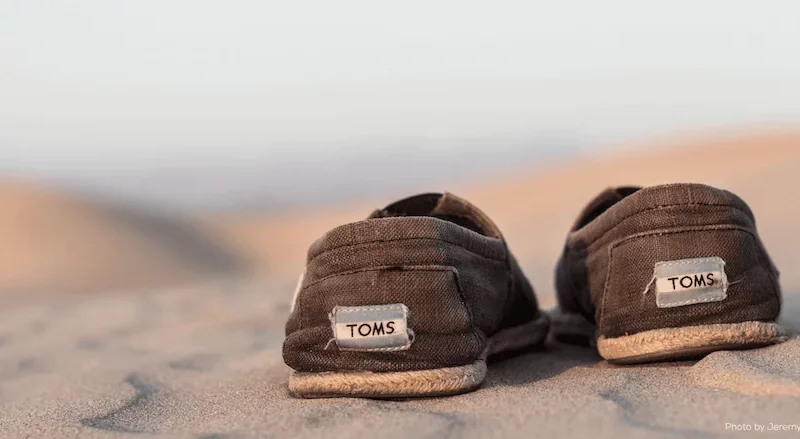



These days, there are rarely two minutes between the thought „I need new running shoes“ and clicking „Buy“—and it’s almost never a straight path. In between, there are 14 tabs, three price comparisons, a voice command in the car, a voice message to your best friend, two push notifications, and, increasingly, an AI chat.
And yet many companies treat the Purchase Decision-Making Process or like a funnel: reach goes in at the top, revenue comes out at the bottom. That’s exactly where the gap arises. Because if you only measure, what who bought it will never know, why. The concept of the 5 „Mys“ bridges this gap—it makes the invisible forces behind every decision visible and, therefore, manageable.
Why the classic Purchase Decision-Making Process no longer works out
The textbook model consists of five straightforward steps: problem identification, information search, evaluation of alternatives, purchase, and post-purchase behavior. It’s still useful as a framework for thinking. As a roadmap for 2026, however, it’s about as accurate as a city map from the ’90s: the streets are still there, but the one-way rules aren’t.
Because customers change their minds. They discover a product in a Reel, forget about it, see it weeks later in a push notification, ask an AI for alternatives, read two reviews, go to the store—and end up buying something else there. The Purchase Decision-Making Process It is not a staircase, but a loop in which stimulation and evaluation are constantly intertwined.
The New Co-Decision-Maker: Artificial Intelligence
The biggest shift over the past two years has occurred in the information phase. Where there used to be ten blue links, there is often just a single summarized answer today.
The figures speak for themselves: About 70 % German consumers have already used AI applications to research products or prices, 54 % received product recommendations that they would not have considered without AI, 53 % would be willing to complete a purchase directly within the AI tool—and 48 % Of AI users, some have already made a purchasing decision based solely on AI-generated information (Source: EY-Parthenon). Younger people, in particular, are driving this trend: According to the same study, among 19- to 24-year-olds 42 % prefers AI.
For companies, this means: A portion of the Evaluation Phase takes place in a space where you have no say. That makes everything all the more valuable, before and according to This black box holds the key—a direct channel to customers, your own data, and a relationship that’s stronger than any algorithm. That’s exactly what Customer loyalty tools intended.
Think Ahead Instead of Playing Catch-Up
Many companies still view their market through the lens that brought them success in the past. That’s understandable—and risky.
Experience is like a lantern behind us; it always illuminates only the part of the path we have already traveled.
Confucius
If customers already know exactly what they want, the decision has usually already been made. The The competition for attention starts earlier: the moment a need arises but doesn't yet have a name. Who is there with the right proposal, wins—not whoever shouts the biggest discount.
The 5 „Mys“: Five drives, one complete picture
The concept of the 5 „Mys“ originates from the customer research framework Me, My Life, My Wallet by KPMG (Global Customer Insights). The basic idea: Human decisions cannot be explained by a single metric. Only when five dimensions are considered together does a realistic picture emerge of how and why someone makes a purchase.
Each „My“ tells only part of the story. Together, they reveal the complexity behind customer decisions—and show you, in very concrete terms, where your company excels and where there is room for growth.
1. My Motivation: What Really Drives People
Values, Expectations, Priorities: Why would someone choose sustainability over price? Or convenience over choice? Motivation is the most stable of the five drivers—those who understand it can align their product assortment and rewards strategies accordingly. A glance at the rewards page shows that it’s worth it: 80 % German consumers want rewards that can be redeemed immediately, and 62 % expect personalized, tailor-made offers (Source: Loyalty Report 2026). Motivation is measured through in-app surveys, reward preferences, and by looking at which Rewards and Challenges is in fact assumed.
2. My Attention: Where My Gaze Wanders
Attention is the scarcest resource in the purchasing decision-making process—and the one that’s wasted the fastest. What matters isn’t how often you send messages, but whether you show up on the right channel at the right time. Open rates, click paths, and times of day provide a pretty reliable indication of that. And silence isn’t a sign of politeness: 84 % Germans want to be informed about special offers and news at least once a week, preferably via email newsletter (Source: Loyalty Report 2026).
3. My Connection: How Connected Someone Is While on the Go
This dimension describes how people are connected to devices, information, and one another: smartphone-first or desktop, digital wallet or plastic card, recommendations from friends or from a review site. The trend is clearly measurable: 73 % of consumers would switch to a digital solution (Source: Loyalty Report 2026). The more digital the connection, the more signals are generated—and the easier it is to anticipate the next step. A good starting point for this discussion: Digital Loyalty Card vs. Plastic Card.
4. My Watch: The Time Factor
„My Watch“ is all about time: How much of it do we have, how is it allocated, and how does that change in response to life events? Starting a career, moving, having a child—each of these events shifts routines and, with them, purchasing patterns. Just how much time people invest in benefits becomes clear in very practical terms: 58 % Germans consciously choose a store that offers a customer loyalty program, 55 % even if it's not on the direct route (Source: Loyalty Report 2026).
5. My Wallet: Where the Budget Goes
This isn't about absolute income, but rather about the Share of Wallet: what percentage of their budget customers allocate to you—and how that percentage shifts across different life stages. The impact is greater than many people realize: On average, customers 30 % more if they use a customer loyalty program (Source: Loyalty Report 2026). That's exactly what tools like RFM analysis are for in Insights & Analytics: It shows who is currently gaining value and who is quietly fading away.
Three Perspectives, through which you read Mys
The five drivers alone remain abstract. It is only through three lenses—in the KPMG model, the levels— Me, My Life and My Wallet – they become analyzable:
- Behavior: What do customers actually do—how often do they shop, which channels do they use, what’s in their shopping cart, and how do they respond to offers?
- Finance: How much flexibility is there, how price-sensitive is the decision, and how is the share of wallet evolving?
- Demographics: Age, household, region, life stage—the context that explains behavior and finances.
Companies that understand this interplay and incorporate it into the design of their customer experiences gain an advantage that is difficult to replicate—because it is based on their own data. In this article, we explain how to collect and use this data effectively. Why Customer Data Is Worth Its Weight in Gold.
From Theory to Practice: The 5 Mys operational do
A model only becomes useful when each driver is assigned a measurable data point and a specific action. Here’s what this could look like in a digital customer loyalty program:
| „My“ | How to Tell | What you make of it |
|---|---|---|
| My Motivation | Survey responses, selected rewards, challenge participation | A mix of premiums based on claim type instead of a flat discount |
| My Attention | Open and click-through rates, channel preference, time of day | Push notifications for spontaneous matters, email for matters requiring explanation |
| My Connection | Device, Wallet Usage, Recommendations | Digital Loyalty Card Plus "Refer a Friend" Program |
| My Watch | Visitor Frequency, Time Slots, Seasonality | Display offers at the actual purchase frequency |
| My Wallet | RFM Analysis, Receipt Amount, Category Mix | Tiered incentives instead of a discount for everyone |
For the classification to work, you need well-defined segments—not 200 individual cases, but a handful of clearly distinct groups. That's exactly what Target Audience Segmentation there.
Four Tripping hazards, which cause the effect to fizzle out
- Measure everything, decide nothing. A dashboard full of metrics without corresponding actions is just for show.
- Personalization without permission. Customers share data—but only in exchange for a clear benefit and with a transparent explanation.
- An offer for everyone. If everyone gets the same discount, you're essentially subsidizing those who would have bought the product anyway—even though 62 % explicitly expect personalized offers (Loyalty Report 2026).
- Analyze it once, and then relax. Life events can shift one's motivation, time, and budget. A segment from two years ago describes someone else today.
FAQ: Frequently Asked Questions About the Purchase Decision Process
What is the purchasing decision-making process?
The purchasing decision-making process describes all the stages that customers go through, from recognizing a need to making a purchase and their behavior afterward. Traditionally, there are five steps: problem recognition, information search, evaluation, purchase, and post-purchase phase. In practice today, this process is not linear but rather a loop with many entry and exit points.
What are the 5 „Mys“?
The 5 Mys are five driving factors from the KPMG framework Me, My Life, My Wallet: My Motivation (Values and Expectations), My Attention (Attention), My Connection (Connecting devices, information, and people), My Watch (Time) and My Wallet (Budget or Share of Wallet). Source: KPMG Global Customer Insights, „Me, My Life, My Wallet“.
How does AI influence the purchasing decision-making process?
AI primarily shifts the information-gathering and evaluation phase. Instead of numerous search results, consumers receive a summarized recommendation. About 70 % of German consumers have already used AI for product or price research, 54 % received recommendations they would not have considered without AI, and 48 % of AI users have already made decisions based solely on AI-generated information. Source: EY-Parthenon, „When AI Goes Shopping“ (n = 1,015, Germany, early 2026).
What information do I need to use the 5 Mys?
You don't need a big data department. Transaction data, visit frequency, channel and engagement behavior, redeemed rewards, and a few targeted survey responses are enough to get started. A digital customer loyalty program provides these signals anyway—you just have to bring them all together.
Does this concept work for small businesses as well?
Yes, and often faster there. Smaller businesses know their customers personally and can directly test hypotheses about motivation or time windows. The 5 Mys simply provide a framework for this gut feeling, allowing it to be systematically utilized and shared.
Conclusion: Understand is the new range
The purchasing decision-making process has become more complex, not more difficult to understand. It proceeds in loops, across multiple devices, and now also through AI systems that no one from the outside can see into. The solution isn’t a bigger advertising budget, but a better model: The 5 „M’s“—motivation, attention, networking, time, and budget—break down a seemingly unpredictable decision into five questions that you can actually answer.
The crucial step is the translation: every “My” into a data point, every data point into a metric. When you do this, you stop guessing what customers want and start knowing it—well before the decision is made. And along the way, you create exactly what is hardest to replace in a world of algorithms and summaries: a direct relationship.