

More revenue, less stress in day-to-day operations: That sounds like a good goal. But if you want to be successful in the restaurant business, you need more than just great food and friendly service. Above all, it’s about building relationships with your guests.
Rising costs, staff shortages, and fluctuating demand make it difficult to plan for walk-in guests. This makes it all the more important to, Regulars to build a base of customers who come regularly, spend more, and recommend your restaurant to others. This is exactly where a representative Market Research In December 2025, an: hello again, in collaboration with the marketagent Institute, surveyed more than 2,000 people in Germany, Austria, and Switzerland about their dining-out habits.
In this guide, we'll show you the numbers behind it, which Customer loyalty programs really work and how you can turn one-time visits into loyal relationships, step by step, in 2026.
Loyalty instead of price increases: Your smart way to more revenue 2026
In 2026, increasing revenue doesn’t mean constantly attracting new customers or raising your prices. The smarter approach is to retain your existing customers and give them good reasons to keep coming back. Regular customers order more often, recommend you to others, and provide you with predictable revenue—even when the market is tough.
With digital tools, personal communication, and a genuine interest in your guests, you build long-term and stable relationships with your customers. This way, your revenue grows naturally, without price pressure and without additional stress for you and your team.
Digitalization: The Sales Booster for Your Restaurant
Digital systems are no longer a novelty in the restaurant industry. They’re an everyday tool for streamlining processes and enhancing the guest experience. From online reservations to digital guest management: With the right tools, you can save time, reduce errors, and fully realize your potential. Here’s how digital solutions can help you in your day-to-day operations:
- Improved utilization: Automatic table assignments and a real-time overview ensure that no seat remains empty.
- Higher Revenue Per Guest: Additional options, such as a menu upgrade or wine pairing, can be offered directly at the time of booking.
- Fewer rejections: Reminders sent via email or push notifications (direct notifications sent to a smartphone) significantly reduce no-shows.
- Learn more about your guests: You'll be able to tell who comes regularly, what's popular, and when demand is highest.
Tip: If you use this data strategically—for example, for personalized offers or digital loyalty campaigns—you’ll see a noticeable increase in revenue per guest. Digitalization is therefore not only efficient but also the key to genuine loyalty.
| Advantage of a Digital Solution | User Consent |
|---|---|
| Overview of Points and All Coupons | 64,3 % |
| Your smartphone is always within reach anyway | 56,1 % |
| Saves space; fewer cards in your wallet | 49,1 % |
| Digital Invoices Instead of Paper Receipts | 38,7 % |
| It looks more modern than a physical map | 34,2 % |
| Is considered more environmentally friendly than a plastic card | 32,4 % |
Just as important as the "if" is the "where": When it comes to the preferred source of information, there is a clear preference for the direct, yet unobtrusive, digital channel.
| Preferred Channel | Consent in the Restaurant Industry |
|---|---|
| Email Newsletter | 39,7 % |
| The Restaurant's App | 39,5 % |
| Company Website | 29,8 % |
| In-person meeting on site | 23,4 % |
Hyper-personalization: Turn guests into regulars
Today, guests expect more than just good food. They want to seen and valued feel. The personal experience determines whether someone comes just once or returns regularly. Even today, it’s no longer just the menu that counts, but the feeling of being welcome.
Study shows: Loyalty is rewarded
A person who follows a plant-based diet does not see an offer of a meat dish as a perk, but rather as a sign that the host doesn't know them at all. That is exactly why they expect 69.9% of users of customer loyalty programs in the restaurant industry receive offers that are personally tailored to them. Those who send only standard messages instead risk causing genuine dissatisfaction among this group.
The Regular Customer Effect: What a Rewards Program Really Does
A good customer loyalty program is a psychological revenue booster. Customers who participate in a program noticeably change their behavior:
| Behavior of Program Users | Percentage |
|---|---|
| They visit more often and spend an average of 25.3 % more | 30,4 % |
| Are willing to take a detour to stop by the vendor's location | 73.5 % (Industry average: 56.0 %) |
| Actively avoid competitors that do not offer a comparable program | 27,9 % |
So it’s especially worthwhile for restaurants to offer a loyalty program. Equally important is the speed at which rewards are received: 92.2 % of users and 82.4 % of the general population consider the ability to redeem benefits quickly to be very important or somewhat important. Patience isn’t a good strategy in the restaurant industry; a benefit received right at the time of payment has a stronger impact than painstakingly collecting points over months.
What could an app for your restaurant look like?
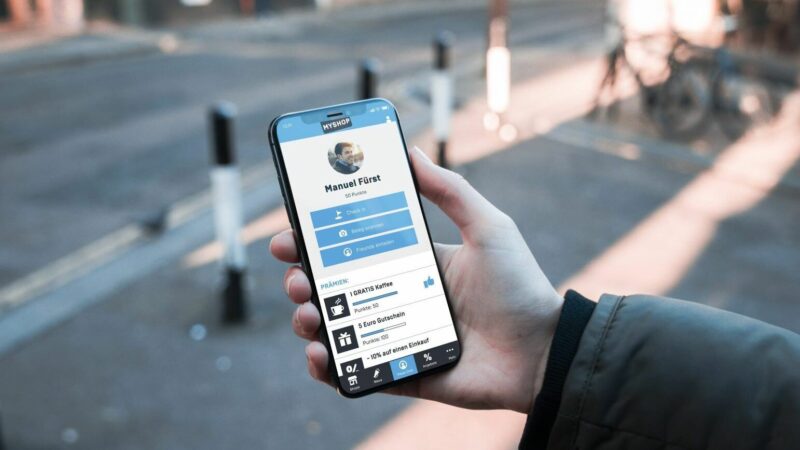
Digital solutions make customer loyalty easier than ever before—for example, with your own app that tracks points, automatically sends offers, and reaches out to guests directly via push notifications. This way, your regulars stay connected to your restaurant even between visits.
- Loyalty Programs: Digital bonus points, stamp cards, or exclusive perks for repeat customers encourage them to come back.
- Personalized Approach: Birthday greetings, favorite meals, or personalized gift certificates help build a sense of closeness.
- Making Active Use of Feedback: Show that you're listening by responding to feedback and continuously refining your offering.
Reviews play a central role. Guests rely heavily on Google reviews, and how you handle them plays a major role in whether someone visits your restaurant or scrolls past it. Responding to reviews regularly shows that you care and that you’re professional. With your own Customer Loyalty App You can also actively help increase the number of positive reviews by specifically inviting satisfied guests to leave feedback.
Practical Example: How L’Osteria Brings Digital Loyalty to Life
The company L’Osteria, founded as early as 1999 and based in Munich, impressively demonstrates how digital customer loyalty works in the restaurant industry. With the “L’Osteria Amici Club,” a loyalty club app developed by hello again, the company has created a central building block of its digital strategy. The result: Over 125,000 registered app users after just a few months, around 50% regularly active users, and a 4.8-star rating in the app stores!
Even small chains can show great success: SOM Kitchen
That digital customer loyalty doesn't just work for big brands is proven by SOM Kitchen from Vienna. The Thai restaurant chain digitized its previously analog stamp card system together with hello again and built an active community with over 1,000 loyal app users in just three months. The result: 64% higher customer frequency, more repeat visits, and genuine closeness to guests.
Gamification: The Desire to Play as a Revenue Driver
Customer loyalty doesn't have to be based solely on tangible price benefits. It can also be fun. The use of playful elements—known as gamification—has become a key incentive in modern loyalty apps. 60 % of users of customer loyalty programs in the restaurant industry would like or would very much like to use a loyalty club app that includes games. This means that interest in the restaurant industry is significantly higher than in other sectors. 28.8% of respondents even state that rewards from games or challenges are particularly appealing to them, more so than traditional, standard perks.
L’Osteria once again demonstrates how this works in practice: In the „L’Osteria Amici Club,“ app users can spin a digital pizza-shaped wheel of fortune once a day to win Amore hearts. Within just a few weeks, there were over 200,000 spins and 1.5 million Amore hearts collected. Since then, about one in two people has been using the app regularly. Social media shares increased by 237 % in the first week after launch, app registrations rose by 83 %, and 13 % more receipts were scanned.
Sustainability: Good for the climate and your account
Sustainability is no longer just a trend—it’s a real economic factor. Regional products, less waste, and efficient processes not only save money but also build trust with your guests. So sustainability pays off in two ways:
- Regional supply chains: Short distances reduce costs and strengthen local partnerships.
- Less food waste: Digital inventory management and smart menu planning help prevent losses.
- Energy Efficiency: Modern equipment and the responsible use of resources reduce fixed costs in the long term.
Actively communicate your sustainability efforts, for example, through digital channels or your App. When guests understand what you do and why, they're more willing to pay a little extra for quality and accountability.
Flexibility & new business areas: Revenue beyond the counter
Since 2026, many restaurant owners have been exploring new ways to diversify their businesses:
- Catering & Events: Additional revenue from corporate events, weddings, or meal kits.
- Secondary brands: Delivery and pickup under your own brand are ideal for slower periods.
- Workshops & Tastings: Create experiences, strengthen customer loyalty, and generate additional revenue.
It is important that you maintain contact with your guests across all channels. Your own app can become the control center here: You can advertise events, send exclusive offers or reward regular customers for their participation, all in one place and without extra effort.
Key Metrics At a Glance
Key metrics are your roadmap to success. By tracking them regularly, you can identify trends early on and make targeted investments. By keeping a close eye on these five metrics, you can efficiently steer your restaurant through every fiscal year while ensuring its long-term success:
| Key figure | What it shows | A good rule of thumb | Short-Term Leverage |
|---|---|---|---|
| Revenue per Table/Seat | Average revenue per seat | Increasing over time | Offer upselling directly during the booking process |
| Recurrence rate | Percentage of guests who return regularly | Over 30 % | Combine a loyalty program with a personalized approach |
| No-Show Rate | Percentage of Unclaimed Reservations | As low as possible | Automatic reminders via text message or email |
| Cost Ratio | Percentage of Cost of Goods Sold, Energy, and Labor in Revenue | As low as possible | Sustainable Procurement Strategies and Energy Optimization |
| Online Booking Rate | Percentage of Reservations Made Online | Over 60 % | Integrate the booking process with the app and website |
Conclusion: Smarter processes instead of price pressure
In the restaurant industry today, higher sales no longer mean more work, but rather smarter processes. Digitalization, personalization, and sustainability aren't just trends—they're the building blocks of genuine, long-term success. Those who understand their guests, empower their team, and make strategic use of digital tools, continues to grow steadily even in challenging times.
The figures from the 2026 Loyalty Report clearly show: A loyalty program in the restaurant industry is worthwhile, provided it is implemented strategically. It serves its purpose when it’s fast (92.2 % Importance), simple (93.3 % Importance), and personalized. Start small, but start anyway. Even a simple digital loyalty program or personalized app communication can be the first step toward greater loyalty, less stress, and measurably higher revenue.
FAQ: Common questions about customer loyalty in the restaurant industry
How does a digital bonus program work in practice?
It's simple: Guests earn points or stamps through your app with every visit. They can then redeem these for rewards, discounts, or special experiences. With automatic reminders, personalized offers, and small rewards, your restaurant stays top of mind, and guests feel valued.
How do I measure the success of my customer loyalty measures?
Key metrics include, for example, the return rate, app activity, revenue per guest, and the no-show rate. Many customer retention systems—also known as loyalty programs—offer, like the hello again apps, a clear dashboard (a central overview page) that shows you this data in real time. This way, you can immediately see which promotions are working and where you should make adjustments.
Why is customer loyalty more worthwhile in the long term than classic advertising?
Because loyal customers generate predictable revenue without ongoing advertising costs. Acquiring new customers is significantly more expensive than retaining existing ones. When you invest in loyalty, you not only build trust but also save on your marketing budget and generate stable revenue. Users of loyalty programs also spend an average of 25.3 % more than they did before.
How can I remain profitable despite rising costs?
Focus on efficiency and loyalty: Reduce energy and food costs through smart planning, and use digital tools to automate processes. Keep your regulars engaged—they’re the ones who fill your restaurant even during slower times. Loyalty acts as a safety net: even when foot traffic drops, returning guests ensure stable revenue.
Is digital customer loyalty also worthwhile for small businesses?
Absolutely. Digital loyalty isn’t a luxury—it’s a simple way to build closer relationships with your guests. Examples like SOM Kitchen show that even small, targeted measures—such as a digital stamp card or personalized push notifications—can have a big impact. Even with just a few hundred regular guests, an app can deliver measurable increases in revenue, engagement, and brand loyalty.
Is gamification really worth it for a restaurant?
Yes, the numbers speak for themselves: 60 % of restaurant guests enjoy or really enjoy using gamified features in loyalty apps—significantly more than in other industries. The example of L’Osteria demonstrates the impact of a digital wheel of fortune: over 200,000 spins, 1.5 million Amore hearts collected, and 83 % more new registrations within just a few weeks. Even small gamified elements, such as a daily wheel of fortune, can thus significantly increase engagement and customer loyalty.
How do I best start with digital customer loyalty?
Start small and specific: Define your goal—for example, more repeat purchases or higher visit frequency. Begin with a simple app solution that reflects your brand, and actively communicate in-store, online, and through your team. Reward feedback and loyalty—that’s how you build genuine relationships. Just a few weeks after launch, you’ll be able to measure your first successes, such as more visits or positive reviews.