

How many loyalty cards do you currently have in your wallet? And how many of them have you actually used recently? Most people know the answer: too many, and not often enough. This is precisely the dilemma of the traditional plastic loyalty card: It’s elaborately designed, printed, and handed out at the register, only to end up forgotten among old receipts and shopping lists.
With the digital loyalty card, you turn the tables: It’s on your smartphone—exactly where your customers look dozens of times a day anyway. In this guide, you’ll learn where plastic cards fall short in everyday life, what measurable benefits the digital version offers, and how you can make the switch in five simple steps .
What is a loyalty card and what types are there?
A loyalty card is a customer retention tool that rewards regular purchases with discounts, rewards, or loyalty points. The best-known example is the classic coffee card: Buy ten coffees, and the eleventh is on the house.
While the underlying principle has remained the same for decades, the technology has advanced significantly. Today, three models are distinguished in the retail and service sectors:
- Physical loyalty card: The classic plastic card with a barcode or magnetic stripe, or the cardboard stamp card.
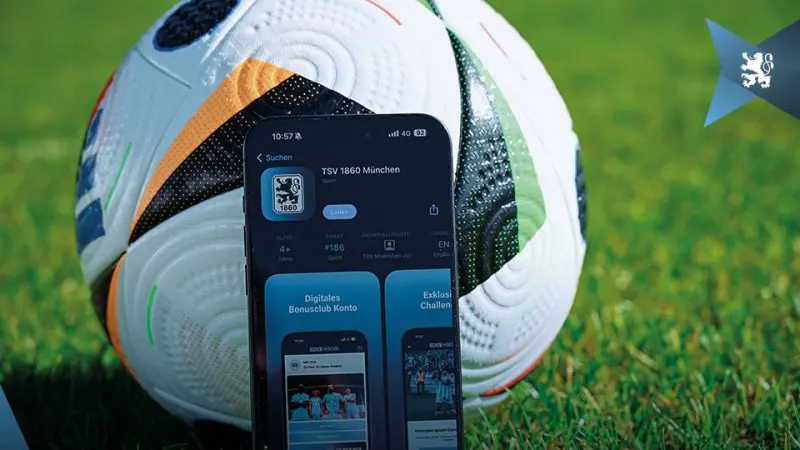
- Digital loyalty card: A software-only solution—either as a standalone loyalty app or integrated into a smartphone wallet (Apple Wallet / Google Wallet).
- Hybrid model: The bridge between two worlds. Customers can choose whether to use the app or a plastic card—behind the scenes, both methods converge into a single digital customer account.
Modern digital loyalty cards are usually powered by a CRM system (Customer Relationship Management). It automatically tracks purchases, aggregates customer data in compliance with the GDPR, and enables automated messages without requiring your team to manually maintain lists.
The 5 Biggest Drawbacks of Plastic Loyalty Cards
The classic loyalty card has worked reliably for decades, and as a simple stamp card, it still serves this purpose to some extent even today. However, as soon as your business begins to grow and you want to build customer loyalty in a targeted way, five clear weaknesses become apparent in day-to-day operations:
- Ongoing costs and unnecessary waste: Every plastic card has to be produced, stored, packaged, and possibly mailed. So your costs increase linearly with every new member—just like the plastic and paper waste. This is becoming less and less consistent with a modern, sustainable brand identity.
- It’s not within reach when you need it most: Plastic cards get forgotten, misplaced, or end up in the other jacket pocket. If the card is at home, your customers miss out on points—and you miss out on valuable data about their purchase. With every additional card from other brands in their wallet, the chance that yours, of all things, will be pulled out decreases.
- Signing up is a test of patience: Fill out a paper form at the ticket counter, turn it in, and wait. Your team has to laboriously type out the handwritten information (including transposed digits in the email address), and the card doesn’t arrive by mail until days later. Each of these hurdles costs you valuable new sign-ups.
- You don't have a direct line to your customers: A piece of plastic can't communicate. If there's no email address or phone number—or if emails end up in the spam folder—your card remains silent. You can't remind customers about expiring points or send spontaneous birthday wishes.
- You're flying blind when it comes to data: A stamped box doesn't tell you who shops at your store, how often they do, or which products are particularly popular. Without these insights, you’re handing out discounts indiscriminately instead of delighting regular customers with targeted offers.
The 6 Benefits of the Digital Loyalty Card
A digital loyalty card transforms a passive piece of plastic into a dynamic communication channel. In your day-to-day business, you’ll notice six main benefits:
1. Always with you—just like your smartphone
The smartphone has long since become a constant companion and, thanks to Apple Pay and Google Pay, is increasingly replacing the traditional wallet. According to the DACH Loyalty Report 2026, 43.2 % of consumers value digital loyalty programs primarily because they always have their smartphones with them anyway. This means your customers don’t have to go through any extra steps when paying.
2. Sign up in just a few seconds
Instead of a clipboard and a pen, there’s a QR code at the register. Customers download the app or open the web app, enter their name, email address, and date of birth (or use quick login via Google or Apple), and start earning points right from their first purchase. Your team doesn’t have to type anything at all.
3. Direct communication via push notifications
Loyalty programs work best when they build a personal relationship. Digitally, you can reach
Loyalty programs work best when they feel personal. Through push notifications—short messages delivered directly to the lock screen—you can reach your customers without any wasted reach. This allows you to:
- Send personalized birthday greetings along with a gift certificate,
- remind users of the points they've earned and the rewards they can redeem,
- Bring back customers who haven't been here in a while,
- Launch short surveys to get immediate feedback,
- Through gamification (e.g., digital scratch-off tickets or collection challenges) to create playful incentives to buy.
4. Data That Really Boosts Your Sales
A digital system gives you a clear, black-and-white picture of what’s happening in your business. At a glance, you can see purchase frequency, average cart size, favorite products, and how well certain promotions are performing. This allows you to create meaningful customer segments and calculate customer lifetime value (Customer Lifetime Value)—always in compliance with the GDPR, of course.
5. Referral Marketing at the Push of a Button
Nothing convinces new customers quite like a recommendation from friends. Digital loyalty cards make „friends refer friends“ a breeze: An invitation link is shared via WhatsApp, and as soon as the referred person makes a purchase, both automatically receive bonus points.
6. Visible Sustainability
No PVC cards, no printed coupon booklets, and—if desired—even digital receipts: You save resources, reduce production costs, and credibly demonstrate to your customers that sustainability isn’t just a slogan for you.
Head-to-Head Comparison: Print, Digital, or Hybrid?
Which solution is the best fit for your business? The following overview provides a direct comparison of all three models:
| Criterion | Plastic or paper card | Digital Customer Card | Hybrid Model |
|---|---|---|---|
| Registration | Paper form, often with a wait time | in seconds on your smartphone | Both options are possible |
| Suitability for everyday use | is easily forgotten or lost | Always with you on your smartphone | depending on the path you choose |
| Communication | No direct address | Push notification, email, in the app | directly to app users only |
| Data & Analysis | It is virtually impossible to analyze the data | Real-time analysis | In some cases, depending on usage |
| Ongoing Costs | increase with every card | do not increase with every registration | Production costs remain |
| Sustainability | Plastic and Paper Waste | no physical production | Fewer cards, but not zero |
| Start-up costs | low | one-time technical setup | The best way is to maintain two paths |
| Ideal for … | Micro-businesses with no data needs | Growing companies focused on customer retention | Mixed target audiences & as a temporary solution |
Do customers even want a digital loyalty card?
Many businesses are hesitant to make the switch because they fear it will overwhelm their regular customers. However, current figures paint a very different picture: According to the hello again Loyalty Reports 2026, approximately three out of four consumers across the entire DACH region would switch to a digital solution immediately if their favorite store offered it:
- Germany: 72.7 %
- Austria: 73.7 %
- Switzerland: 76.1 %
So the demand has been there for a long time—often, the only thing missing is the right product in the store.
The hybrid model: How to really get everyone on board
Not every customer downloads an app right away on the first day. The hybrid model is ideal for this transition: Those who want to can use their smartphones, and those who prefer to stick with their usual card can continue to scan it at the register.
The advantage, when implemented correctly: Behind the scenes, both media converge into the same digital customer account . The plastic card essentially serves only as a physical key to the digital profile. This greatly lowers the barrier to entry.
Case Study: How KLIPP Reaches Both Older and Younger Customers
The fact that digital transformation isn’t purely a generational issue is demonstrated by KLIPP Frisör, Austria’s largest hair salon service provider. The company is banking on precisely this smooth transition: customers without smartphones keep their traditional cards, while everyone else is actively encouraged to use the app.
The results speak for themselves: About 75 % of the customer base now use the digital loyalty card, and within a year, the bonus club grew to over 280,000 members. The best argument against any age-related stereotypes: The company’s oldest active app user is a proud 104 years old.
Here's how the digital loyalty card works in everyday life
For your customers, the process is incredibly simple: Open the app, show the QR code at the register, and earn points. Alternatively, purchases can also be linked using the customer number or by quickly scanning the receipt.
Behind the scenes, you manage everything through a user-friendly dashboard. There, you set rewards, set up automatic reminders, and track your sales performance in real time. The shopping experience is especially seamless when the POS system and loyalty program are directly linked—as is the case, for example, at the Müller drugstore chain, where payment and point collection happen in a single scan via „Müller Pay.“.
From Plastic to Digital: Your Transition in 5 Steps
The transition from a physical to a digital loyalty card doesn't have to be a massive undertaking. With this roadmap, you can launch your digital loyalty card in a structured way:
| Step | What You Do | What to Look For |
|---|---|---|
| 1. Set a goal | Define what you want to achieve: more repeat purchases, larger shopping carts, or better customer data. | One clear main goal is more than enough to get started. |
| 2. Select a model | Choose between your own app, a wallet card, or the hybrid model. | Base your approach on the habits of your primary target audience. |
| 3. Check Providers | Compare specialized loyalty program providers based on specific criteria. | First, make sure you're compliant with the GDPR and that it integrates with your point-of-sale system. |
| 4. Prepare the team and the cash register | Train your employees and thoroughly test the scanning process at the register. | Every member of the team should be able to explain the benefits in a single sentence. |
| 5. Invite customers | Promote the card prominently at the point of sale (display stands, receipts, social media). | Offer an attractive welcome bonus and transfer existing points fairly. |
Checklist: What to Look for When Choosing a Provider
By the way, you don’t have to spend tens of thousands of euros to have your own app developed. Providers like hello again offer so-called white-label apps—a technically sophisticated solution that appears in the app stores completely branded with your logo and under your name. Keep the following points in mind when making your selection:
- 100 % GDPR Compliance and Server Location in the EU
- Seamless integration with your point-of-sale (POS) system or CRM
- Simple automations (e.g., birthday greetings, reactivation)
- Clear reports and key metrics
- Predictable Costs, which remain reasonable even with strong membership growth
For which industries is a digital loyalty card particularly worthwhile?
A digital loyalty card really shines wherever customers return regularly. It has proven particularly effective in the following areas:
- Retail & Fashion: Targeted notifications about new collections and VIP sales.
- Restaurants & Cafés: The digital stamp card replaces the crumpled paper one.
- Bakeries & Pastry Shops: Quick scanning at the counter with no wait during the morning rush.
- Hair Salons, Beauty Salons, and Fitness Studios: Appointment reminders and loyalty rewards for regular customers.
- Pharmacies: A direct line for health campaigns and personalized advice.
Conclusion: The future of the loyalty card is digital
One thing is certain: Motivation through rewards pays off. The loyalty card will continue to be a reliable tool for turning casual customers into loyal regulars. The only thing that has changed is where this relationship takes place: away from the overflowing wallet and onto the smartphone.
The biggest hurdle is often just in your head, because your customers are already ready. When three-quarters of people in the DACH region are waiting for a digital solution, making the switch isn’t a risky decision—it’s a real opportunity. And for anyone who’s still attached to their traditional card, the hybrid model> provides the perfect bridge. This way, the transition becomes a win-win for both sides. Your customers can earn points more effortlessly than ever before, and you build customer loyalty that extends far beyond the next receipt.
FAQ: Frequently Asked Questions About the Loyalty Card
Which is better: a standalone app or a card in your smartphone wallet?
A card for Apple Wallet or Google Wallet doesn't require downloading an app and is extremely quick to set up. A custom (white-label) app, on the other hand, offers significantly more flexibility for active customer engagement: You can send targeted push notifications, launch surveys, incorporate gamification elements, and maintain a permanent presence on your customers’ home screens with your logo.
How much does a digital loyalty card cost compared to a plastic card?
While plastic cards incur ongoing costs for printing, packaging, and shipping with every new member, digital solutions are typically structured as a predictable monthly subscription. In addition, ready-made white-label solutions eliminate the need for expensive in-house app development—so costs remain predictable even as your rewards program grows significantly.
What happens to the points earned by customers with existing plastic cards?
No points are lost during the transition. Existing point balances and rewards can be easily transferred to the new digital customer account—either automatically using the existing customer number during registration or quickly by your team at the register. This ensures full acceptance among your regular customers.
Is a digital loyalty card GDPR-compliant?
Yes, as long as you use a professional provider with servers located in the EU. With digital registration, customers give their consent to data processing transparently via an opt-in directly on their smartphone. This often puts you in a legally sounder and safer position than using handwritten paper forms at the register.
Is it still worth making the switch even if many of the customers are older?
Yes—experience shows that age is hardly a barrier these days. A good example is KLIPP Frisör: About three-quarters of all customers there use the app, and the oldest active user is 104 years old. If you’re still unsure, just start with a hybrid model: Those who want to can use the app, and everyone else can continue collecting points with their card as usual for now.