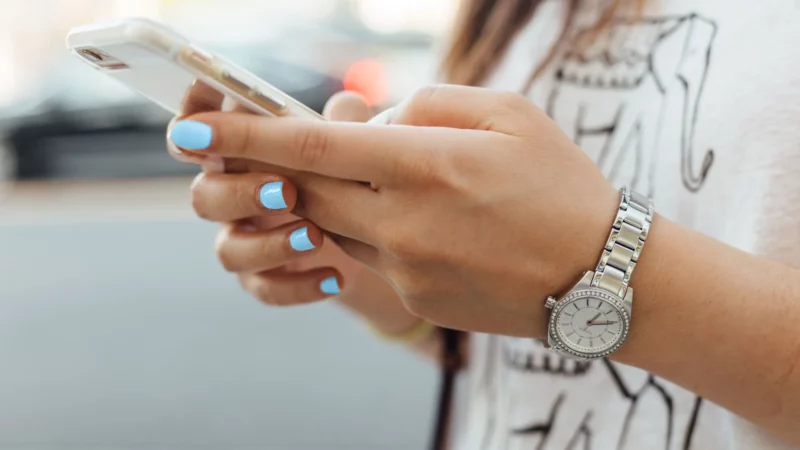



Your phone vibrates briefly; you glance at the screen, and the message is already read. That’s how fast effective customer communication works today. Push notifications land exactly where your customers spend most of their time anyway: on their smartphones. They’re short, personalized, and get through without any delays.
But what exactly sets a push notification apart from a simple text message? And how can you use them so they actually have an impact, instead of disappearing unread on the lock screen? That’s exactly what this post is about.
What is a push notification—and how does it differ from a text message?
If you've ever used an app, you're probably familiar with push notifications. They appear right on your smartphone's home screen, without you having to open the app first.
Visually, they resemble a Text message. Nevertheless, there is one major difference: Push notifications are customized by the sender and sent based on customer behavior.
Another point is consent. Push notifications are only delivered if users have enabled them in the App settings explicitly allowed have. This voluntary consent is what sets it apart from traditional SMS advertising.
Here's how a push notification reaches your customers
Behind the scenes, a simple process takes place. An event triggers the notification, the system personalizes the content, and the message appears directly on the lock screen.
Why Push Notifications Work So Well for Customer Communication
The biggest advantage is that you reach your customers right where they are anyway. No other channel gets this close to your target audience’s everyday lives.
In Austria, 93 percent of people can now be reached via smartphone. This reach is constantly opening up new opportunities for direct, personalized communication.
Trust Instead of the Feeling of Being Spammed
Because customers have to actively enable push notifications, they are less likely to feel like advertising. This trust forms the foundation for a long-term customer relationship.
Push Notifications Compared to Other Communication Channels
Push notifications aren't the only way to stay in touch with your customers. The following overview shows how the most important channels differ.
| Channel | Accessibility | Consent Required | Typical Applications |
|---|---|---|---|
| push notification | Right on the lock screen, even without an app open | Yes, via app settings | Last-minute promotions, reminders, personal occasions |
| Text Message | Even without an Internet connection | Usually yes, depending on the provider | Urgent Information for Customers Without the App |
| Very high open rate in the familiar chat environment | Yes | One-on-one communication | |
| Even outside the app, for all contacts | Usually yes, via double opt-in | Newsletters, automated messages such as birthday greetings |
Our overview of how to centrally manage all these channels will show you Push Notifications In detail.
Real-World Examples: What Are Push Notifications Particularly Well Suited For?
- Special Offers: Provide real-time updates on new discounts or products.
- Memories: Notify users when points are about to expire or events are coming up.
- Personal Occasions: Send birthday greetings or personalized offers.
- Reactivation: Bring inactive customers back to your business with a targeted message.
How to Set Up Push Notifications for Your Customer Communications
Push notifications always require a dedicated loyalty app. Only through the loyalty club can you ask users for their consent and then send them targeted messages.
IT service providers such as hello again We offer an integrated push notification service for this purpose. You set up the message once in the dashboard, select the appropriate target audience—and the rest happens automatically. In addition to push notifications, you can also manage email, SMS, and WhatsApp centrally. Our page on Communication & Marketing Automation.
Dos and Don'ts for Successful Push Notifications
- Dos: Keep your messages brief, specific, and personal. Use occasions such as birthdays or periods of inactivity to send automated, relevant messages.
- Don'ts: Don't send notifications too often, or customers will quickly turn them off again. Also, don't send messages that don't offer clear value. Every push notification should give customers a reason to open it.
You can find even more practical tips on mobile customer loyalty in our article Mobile Customer Loyalty: Do’s and Don’ts.
FAQ: Frequently Asked Questions About Push Notifications in Customer Communication
What happens if customers disable push notifications?
Then the message will no longer appear as a pop-up on the lock screen. However, it will remain visible within the app and can be viewed there at any time. For businesses, this means that the channel isn't completely lost, but it does become significantly less prominent.
What are push notifications particularly well suited for?
Push notifications are ideal for short-term, time-sensitive messages. These include discount promotions, reminders about bonus points, important news, or personal occasions such as birthdays. They are also a proven way to re-engage inactive customers.
How often should I send push notifications?
In this case, less is often more. It makes sense to send messages at a frequency that keeps customers informed without overwhelming them—one message per week is usually more than enough. If you send messages too often, you increase the risk that push notifications will be disabled.
Can I control the exact shipping date?
Yes. You can either send push notifications immediately or schedule them for a specific date and time. This is especially useful for holidays, events, or limited-time promotions.
Do I really need my own app for push notifications?
Yes, having your own loyalty app is a technical requirement for push notifications. Only through the app can customers actively consent to receive notifications and get them directly.
Is sending push notifications GDPR-compliant?
Yes, as long as users’ consent is actively obtained in advance. Modern loyalty systems are designed so that consent, communication, and opt-out are handled in full compliance with the GDPR.
Conclusion: Push notifications as a direct line to your customers
Push notifications aren’t just a trend—they’ve long been an integral part of modern customer communication. They’re fast, personalized, and reach customers right where they are anyway. When used wisely, they build trust instead of annoying customers with ads. The foundation for this is always your own loyalty app—the rest runs largely on its own.