


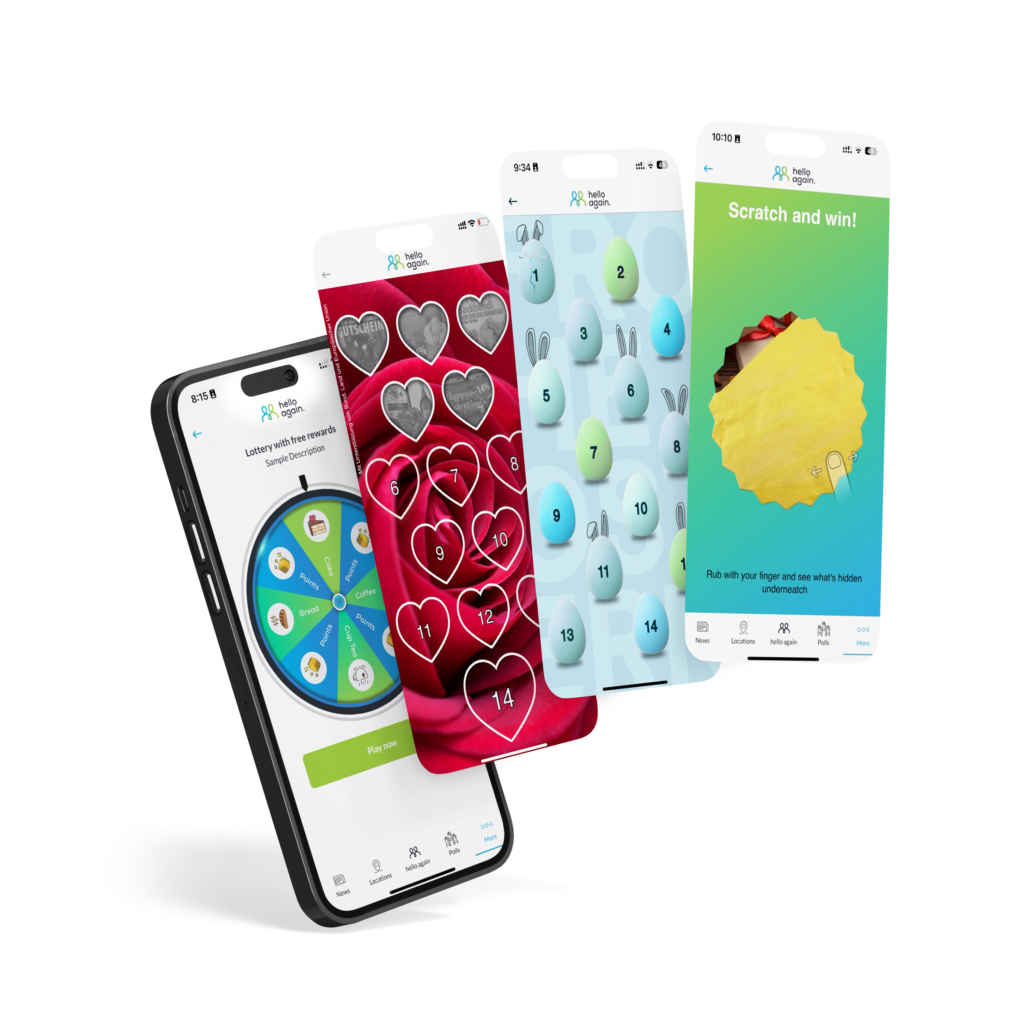
Imagine that your customers don't just come to shop—they keep coming back to you almost on their own. And all because they enjoy interacting with your brand.
Sounds almost too good to be true? Welcome to the The World of Gamification. Don't worry—you don't need any gaming experience or a degree in marketing. All you need to know is this: Game-like elements make real life more motivating. And that's exactly what your company can take advantage of.
Why Gamification is so important right now
We live in a world where you can lose your customers practically anywhere. A new store in the neighborhood, an online promotion, a TikTok trend, or a coupon from another brand—and just like that, they’re gone. Customer loyalty is no longer a given these days.
That's why one tool is becoming increasingly popular in marketing: people positive feelings to give them something, rather than just trying to sell them something. That’s exactly where gamification comes in. It ensures that customers are excited when they open your app. That they’re proud to level up. That they’re happy to come back to you because they don’t want to interrupt their streak. And that happens completely automatically, because that’s just how we humans are wired.
What is Gamification actually?
Gamification means incorporating game-like elements into everyday life to make people more motivated and engaged. Imagine:
- You get points when you buy your coffee in the morning.
- You level up when you've been there 5 times a week.
- You get a badge (a small emblem) for special actions, e.g. "early bird".
Why Gamification works so well: a look inside the brain
People love progress: Whether we're at the gym, solving a crossword puzzle, or saving up for a vacation, we love the feeling of having accomplished something.
Dopamine is a neurotransmitter in the brain that is released when we accomplish something. A small sense of accomplishment, and suddenly Dopamine Released. Just one more little experience, and you'll get even more of it.
Gamification takes advantage of exactly that. A point here, a progress bar there, a badge after an action—and suddenly, interacting with your brand feels better.
When people regularly receive a reward, a habit is created. Psychologists call that "Habit Loop", roughly translated into German as Habit Loop. Sounds complicated, but it isn't. Just imagine you drink coffee every morning and get a digital stamp from your favorite bakery around the corner.
Once you've collected a certain number of stamps, you'll get a free specialty coffee—and maybe even a pastry to go with it. Would you let this opportunity slip by? Probably not. And that's how you can get your customers to keep coming back to your store.
People like to compare themselves to others, often without even realizing it. It's just part of who we are. We feel happy when we've accomplished something that others might not have yet, or when we see a small step forward that we hadn't taken ourselves before.
This has nothing to do with competition in a negative sense. No one is supposed to feel bad or lose. It's about the good feeling of having accomplished something, and about having fun. These little Social interactions motivate many people more than you might think, and they playfully encourage them to stick with it longer. You can read more about the key psychological drivers behind this in our article More User Engagement with Gamification.
What do I gain from gamification as a company?
Gamification helps you get customers to visit more often, buy more, and stay loyal to you longer. And that's not just a gut feeling—you can actually measure it.
- More "Return": When people see that they’re getting closer to a goal—for example, through a digital stamp or reaching the next level—they experience a small sense of accomplishment. This feeling keeps them coming back. They want to keep going, not break the streak, and fill up the progress bar.
- Higher revenue: Many customers like to „go the extra mile“ when it means completing a challenge or earning extra points. This happens without any pressure at all. It’s more of a playful impulse. And it works time and time again in practice.
- Better data: If you offer points for providing feedback or filling out a profile, people will be much more willing to actually do those things. People feel rewarded—and you get the information that helps you improve your offerings and better understand your customers.
Which Game mechanics really work?
There are numerous ways to use gamification. Here is an overview of the most important mechanics:
Points
Points are the simplest and most well-known form of gamification. Customers collect them for actions such as shopping, reviewing, or opening the app. They make progress immediately visible and provide a small feeling of success that motivates them to continue – without complicated rules.
Badges
Badges are small digital badges you receive when you've achieved something special: completed a challenge, maintained a streak, or tested a specific product. They have no direct monetary value, but feel valuable because they provide recognition and show: "I accomplished something."
Levels
Levels divide progress into larger steps – like Bronze, Silver, or Gold. The more you do, the higher you climb. This gives customers a sense of status and development. They see in black and white that they belong to the most loyal or active users – and that motivates enormously.
Surprises
Surprises always work because they create excitement. A fortune wheel, a "Mystery Gift," or a random bonus triggers a small moment of surprise. This unexpectedness creates a strong feeling of joy in the brain, which makes people curious and encourages them to return.
Challenges
Challenges are small tasks that invite customers to try something out – such as testing three products, visiting five times a week, or submitting a review. They make concrete actions playful and give everything a goal. This creates motivation without feeling like advertising or pressure.
Digital Stamps
Digital stamps are the modern version of the familiar paper stamp card. When you make a purchase, you receive a stamp in the app—visible, easy to track, and impossible to lose. This motivates customers to fill up the row and rewards regular visits, which works extremely well, especially in bakeries, cafés, and snack bars.
Streaks
Streaks reward streaks: meaning being active for several days or weeks in a row. Each continuous streak creates pride and a small 'I don't want to break this' feeling. This creates strong routines – and routines are one of the most important drivers of customer loyalty.
Micro-Rewards (Mini-Rewards)
Micro-rewards are very small, quick rewards that you almost get 'on the side': an extra point, a small bonus, or a mini-surprise. They keep motivation high because you regularly feel small successes without having to do much.
Progress Bars
A progress bar visually shows how close you are to the next goal or level. Just one glance is enough to trigger the inner drive: 'Just a little more – I can do that today!' This works because our brains like to complete unfinished things.
| Mechanics | Effect | Particularly suitable for |
|---|---|---|
| Points | Visible Progress with Every Action | Getting Started with Each Program |
| Badges | Recognition for Outstanding Achievements | Non-monetary Incentives |
| Levels | Making Status and Progress Visible | Long-Term Commitment |
| Surprises | Suspense Through Chance | Emotional Attention |
| Challenges | Specific Actions with a Goal | Onboarding New Customers |
| Digital Stamps | A modern punch card with no risk of loss | Bakeries, Cafés, Snack Bars |
| Streaks | Reward for Series | Establishing Routines |
| Micro-Rewards | Small, frequent successes | Daily Commitment |
| Progress Bars | With a visual goal in mind | Goal-Oriented Users |
Why you don't need dedicated IT for Gamification
The technology behind gamification in customer loyalty is much less complicated than many think. You can either work with a Web-App that runs directly in the browser without a download and is ready to use immediately – ideal for quick, simple gamification like digital stamps or small challenges.
Or you can opt for a native app for iOS and Android, which feels like a real brand app, supports push notifications, and offers more advanced features such as camera functions and AR.
What you choose depends on how intensely you want to use gamification. The pleasant part: You don't have to develop any of it yourself. With a White-Label-App for example from hello again you get a complete solution where all important functions – points, stamps, games, rewards – are already integrated and only need to be adapted to your brand. This allows you to start immediately without technical effort.
Privacy: simply explained and half as bad
Data protection often seems complicated, and many companies are wary of the GDPR (General Data Protection Regulation). That’s understandable. The good news: You don’t need legal expertise or a large technical infrastructure for gamification. What matters most is how you choose the system you work with—because good solutions automatically handle most of the data protection work for you.
Why is the right system for data protection so important?
Because a well-structured gamification solution automatically takes care of many of these points. A white-label app, like the one we offer at hello again, brings several advantages with it:
- All data is centrally located in one place and is not distributed across numerous different tools.
- No direct access is possible from the outside, because the app runs in a closed, secure environment.
- You don't have to worry about technical security measures yourself, because they are already integrated.
- Updates, encryption, and protection mechanisms run in the background – without any effort on your part.
Suddenly, data protection doesn't seem so intimidating anymore, but simply becomes part of the system.
How you measure your success
You don't have to be a statistics expert to find out if your gamification is working. It's enough to answer a few simple questions on a regular basis. Each of these questions will show you whether your gamification elements are effective, and you'll get a feel for it very quickly. Because when these metrics go up, you'll know that your gamification approach is working.
| Key figure | What she shows you |
|---|---|
| Activation Rate | How many customers actually try out your program. |
| Retention | Whether your customers stick around or just stop by once and then disappear. |
| Commitment | How many challenges have been completed, how many points have been earned, or how often the app is opened. |
| Average Order Value (AOV) | Whether customers end up buying a little more over time because they want to reach a goal. |
How you involve your team
Gamification only works if your team is on board. They need to understand why you’re doing this and how it benefits their day-to-day work. The simpler you explain it, the faster enthusiasm will grow. For example, tell them: „Gamification helps us retain customers for longer. It makes shopping more fun, brings a sense of routine to our daily work, and is easy for all of us to use.“
That’s often all it takes. The important thing is to train your team in a concise and straightforward way—no long workshops, no endless slides. A few clear examples, a quick look at the app, and a joint test run are usually all it takes.
You can even the Gamifying the training a little bit. A little quiz at the end, a digital badge for successful completion, or a mini-level “You are now a Gamification Pro” – and suddenly learning is fun. That not only creates a smile but also ensures that the content sticks.
When your team understands the mechanics and enjoys them themselves, your customers will feel it too – and that’s when gamification in customer loyalty unfolds its full effect.
Customer loyalty in 2026 will work if it’s easily accessible, remains personal, and offers immediate rewards. Only those who support their customers in their daily lives and offer genuine added value can build a close relationship. Because that’s exactly what makes the difference.
Franz Tretter, CEO and founder of hello again
The Future of Gamification in Customer Loyalty <h1>Gamification in der Kundenbindung</h1> <p>Gamification ist ein Begriff, der in den letzten Jahren immer beliebter geworden ist. Aber was genau bedeutet er und wie kann er im Bereich der Kundenbindung eingesetzt werden?</p> <p>Im Kern geht es bei Gamification darum, spieltypische Elemente in nicht-spielerische Kontexte zu integrieren. Das bedeutet, dass Unternehmen Elemente wie Punkte, Abzeichen, Bestenlisten und Herausforderungen nutzen, um Kunden zu motivieren und zu engagieren.</p> <h2>Warum Gamification für die Kundenbindung wichtig ist</h2> <p>Es gibt viele Gründe, warum Gamification ein wertvolles Werkzeug für die Kundenbindung sein kann. Hier sind einige der wichtigsten:</p> <ul> <li>Erhöhte Kundenbindung: Gamification kann Kunden dazu bringen, länger auf Ihrer Website oder App zu bleiben und häufiger zurückzukehren. </li> <li>Verbesserte Kundenloyalität: Wenn Kunden das Gefühl haben, dass sie für ihre Treue belohnt werden, sind sie eher bereit, weiterhin Ihre Produkte oder Dienstleistungen zu nutzen. </li> <li>Mehr Engagement: Gamification kann Kunden dazu anregen, sich aktiv mit Ihrer Marke auseinanderzusetzen und Inhalte zu teilen. </li> <li>Wertvolle Daten: Gamification kann Ihnen wertvolle Daten über das Verhalten und die Vorlieben Ihrer Kunden liefern. </li> </ul> <h2>Beispiele für Gamification in der Kundenbindung</h2> <p>Es gibt unzählige Möglichkeiten, Gamification in die Kundenbindung zu integrieren. Hier sind einige Beispiele:</p> <ul> <li>Treueprogramme: Bieten Sie Kunden Punkte für Einkäufe, Bewertungen oder das Teilen von Inhalten in sozialen Medien an. </li> <li>Herausforderungen: Fordern Sie Kunden heraus, bestimmte Ziele zu erreichen, z. B. das Abschließen eines Online-Kurses oder das Erreichen eines bestimmten Umsatzes. </li> <li>Bestenlisten: Zeigen Sie die besten Kunden in einer Bestenliste an, um Wettbewerb und Motivation zu fördern. </li> <li>Abzeichen: Verleihen Sie Kunden Abzeichen für das Erreichen bestimmter Meilensteine. </li> </ul> <h2>Tipps für die erfolgreiche Umsetzung von Gamification</h2> <p>Um sicherzustellen, dass Ihre Gamification-Initiativen erfolgreich sind, sollten Sie die folgenden Tipps beachten:</p> <ul> <li>Definieren Sie klare Ziele: Was möchten Sie mit Gamification erreichen?</li> <li>Kennen Sie Ihre Kunden: Was motiviert Ihre Kunden?</li> <li>Machen Sie es einfach: Die Gamification-Elemente sollten einfach zu verstehen und zu nutzen sein. </li> <li>Bieten Sie Belohnungen an: Die Belohnungen sollten für Ihre Kunden attraktiv sein. </li> </ul> <h2>Fazit</h2> <p>Gamification ist ein leistungsstarkes Werkzeug, um die Kundenbindung zu verbessern und die Kundenloyalität zu fördern. Wenn Sie die oben genannten Tipps befolgen, können Sie Gamification erfolgreich in Ihre Kundenbindungsstrategie integrieren.</p> <p>hello again!</p>
Gamification is already present in many apps today, but it will become even more widespread in the coming years. The technology is getting smarter, experiences are becoming more immersive, and much of it happens automatically in the background. It will appear wherever brands want to motivate customers. And the more naturally these experiences are integrated, the stronger the bond between customers and companies will become.
AI in Gamification
In the future, AI (Artificial Intelligence) will be able to identify on its own what motivates customers. It will automatically create tailored challenges—for example, a small task for frequent buyers or a gentle nudge for occasional customers. No manual planning required—just the push of a button.
AR (Augmented Reality)
AR adds a playful element to the physical store. Customers can try out products virtually, find digital clues, or scan rewards. This makes shopping more of an experience than just a transaction.
Micro-Gamification
Micro-gamification will pop up everywhere in everyday life. Mini-rewards for small steps—such as opening the app, reading a tip, or filling out a short form. No one actively notices that gamification is happening here, but motivation increases nonetheless.
Phygital
Phygital bridges the physical and digital worlds. You buy something in a store and then complete a digital mission. Or you complete a challenge at home and receive a reward for it at the store. This blend will become a normal part of the customer experience.
Conclusion: Why you should start now When to Start Gamification
Gamification isn't a toy or a trendy idea. It's a simple, yet incredibly effective tool that helps you in practice:
- to see your customers more often,
- to noticeably increase sales,
- to collect valuable data,
- to make your brand more human and likeable,
- to build routines that foster long-term loyalty,
- and to remain relevant in a highly competitive market.
And the best part: Gamification works even small and uncomplicated. Start with something simple, such as a digital loyalty card, a few points for specific actions, or a small, fun mini-challenge. That's all you need to begin with.
Our white-label app from hello again comes with everything you need to get started: points, stamps, rewards, challenges, and a clear, easy-to-use dashboard. It’s fully set up, customized with your company’s branding, and ready to use right away. What a Loyalty App You can find out exactly how in our post on the 6 most frequently asked questions.
FAQ: Frequently Asked Questions About Gamification
What exactly is gamification?
Gamification means incorporating playful elements such as points, levels, or small rewards into everyday processes. It's not about developing a game, but about making everyday actions more motivating. Even simple things like a digital loyalty card or a small challenge are enough for customers to engage more actively with your brand and return more often.
Do I need a lot of technology or a large IT team for that?
No. Gamification can be implemented today without your own technology team. With a white-label app that already has all the functions integrated, you can start directly. You don't need to program anything, but just adapt content and design to your brand. This makes technology a pleasant background theme that simply works.
Does gamification really work – or is that just marketing hype?
Gamification works because it is based on natural behavioral patterns. People react positively to progress, small successes, and surprises. These mechanisms ensure in practice that customers return more often, stay longer, and actively use your offers. It's less a trend than a psychologically sound tool.
Is gamification GDPR compliant?
Yes, if you handle data transparently and only collect what is necessary for the functions. It's particularly easy with a system that already integrates GDPR requirements. A white-label app stores all data centrally and securely, making external access impossible. This ensures security and relieves you in everyday life.
How quickly can I start and when will I see initial results?
With a ready-made solution, you can get started practically right away. You’ll often see initial results after just a few weeks—such as increased app usage or more stamps. Behaviors like repeat visits or the development of routines usually take a little longer to emerge and vary by industry. Even a small start is enough to see the impact.
For which industries is gamification best suited?
Gamification works across all industries, but it’s particularly effective in settings where the goal is to encourage customers to return regularly. This applies, for example, to bakeries and cafés with digital stamp cards, to the fashion retail sector with levels and badges, and to the beauty and wellness industry with challenges centered on skincare routines. In the restaurant industry, too, elements like wheels of fortune or streak features lead to a measurable increase in repeat business.