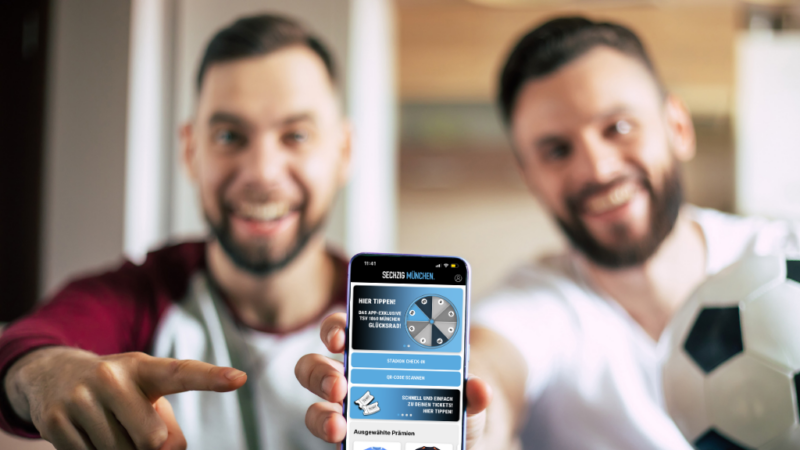



You're considering starting your own loyalty app for your company? Great! Because technically, getting started has never been easier than it is today. But how do you ensure that your app becomes a real footfall driver and doesn't end up in the 'digital graveyard'?
The good news first: If apps fail these days, it's rarely due to IT or complicated technology. The key to success lies primarily in the right strategy and psychology – and those are much easier to master than many think. To ensure your project is a direct hit, we'll debunk the 8 biggest myths about loyalty apps and digital customer loyalty in this article and show you simple solutions that really work.
| Myth | Reality |
|---|---|
| The app becomes self-running | If it doesn't have an immediate benefit, it will be deleted quickly |
| Satisfied customers remain automatically loyal | True loyalty requires an emotional bond, not just satisfaction |
| Customer loyalty only works through discounts | Soft benefits and experiences often have a greater impact than discounts |
| Apps don't bring anything in the B2B business | Efficiency and convenience also win over B2B customers |
| Nobody willingly gives away their data | When there is genuine added value (value exchange), customers are happy to share their data |
| Once programmed, the system runs automatically | Without fresh content, usage drops after a few months |
| Many downloads automatically mean success | Monthly Active Users and the Redemption Rate Are Key |
| An own app is something only corporations can afford | SaaS and white-label models make it affordable even for small and medium-sized businesses |
Myth 1: The app becomes self-running
- The assumption: As soon as the app is available in the store, customers will start using it and will automatically remain loyal to us.
- The Reality Check: An app is a brilliant tool, but it’s not a magic bullet. If it doesn’t offer immediate value, many users will unfortunately delete it from their phones pretty quickly.
- The solution: Customers don't download an app just to do you a favor. They want to solve a problem or get a direct benefit. So make it as easy as possible for them!
- Best Practice: Make sure to create an „aha moment“ right from the start. You need a strategy that offers instant gratification. In the future, loyalty apps—such as those from hello again—will automatically handle a large part of this for you, but you’ll still need to promote them yourself.
- Example (Retail): A supermarket that only displays its flyer as a PDF? That’s no longer enough these days. You’ll win customers over with real-world tools, like digital shopping lists or personalized coupons that save them money right at the register.
Myth 2: Satisfied customers remain automatically loyal
- The assumption: Our customers are satisfied; they're not leaving us.
- The Reality Check: Satisfaction is important, but unfortunately, it’s no guarantee. Reality often shows that even happy customers will switch to the competition if it’s even just a little bit cheaper there. Why? Because satisfaction is purely a matter of the head—but true loyalty comes from the gut.
- The solution: The crucial step is the shift from mere habit to emotional connection. You don't just want to be „okay“; you want to inspire.
- The Strategy: This is where digital tools really shine: Set emotional anchors! With gamification, exciting status levels, relevant push notifications, or an exclusive club, you can turn satisfied buyers into true fans. Our article shows you exactly how to do this Gamification in the Restaurant Industry. And a fan doesn't switch just because it's 50 cents cheaper somewhere else.
Myth 3: Customer loyalty only works through discounts
- The assumption: A good customer loyalty program really consists of nothing more than discounts and points.
- The Reality Check: Watch out—it’s a trap! If you attract customers solely with low prices, you won’t build genuine loyalty—you’ll just be buying short-term sales. Unfortunately, these „bargain hunters“ often disappear as soon as a competitor offers even a single cent less.
- The solution: Break free from the price war! Modern strategies focus on so-called „soft benefits.“ These are perks that cost your company very little but feel extremely valuable and exclusive to your customers. Experience-based rewards, such as an exclusive invitation to a special event, work particularly well.
- Example (Bakery/Pastry Shop): Instead of offering blanket discounts, the Austrian pastry shop Jindrak in Linz has introduced an experience reward. Once customers collected a certain number of Linzer Torten in the app, they were rewarded with an exclusive baking session with the master pastry chef himself. This not only created a personal connection to the brand but also provided an experience that customers enjoy looking back on and recommending to others.
Digital customer loyalty programs will be a clear competitive advantage for retailers in 2026. Especially in times of economic uncertainty, they help companies position themselves and stand out from the competition. Rewarding loyalty benefits both sides.
Rainer Will, Managing Director of the Austrian Trade Association
Myth 4: Apps don't bring anything in the B2B business
- The assumption: Loyalty apps are just a gimmick for end customers. In B2B, personal sales are what really matter in the end.
- The Reality Check: Don’t forget: B2B buyers—especially sole proprietors—are also used to top-notch services and user-friendly apps in their personal lives. So why should they have to struggle with complicated ordering processes at work? They want the same „convenience“ that a modern loyalty app offers and would like to be regularly informed about relevant offers.
- The solution: Here’s your big opportunity! In the B2B sector, your loyalty app doesn’t necessarily have to attract users with colorful hearts. The key to success is efficiency. If your app makes day-to-day work easier—for example, through notifications, service updates, or personalized offers—you’ll make yourself indispensable.
- Example (Skilled Trades/Wholesale): Imagine a tradesperson at a wholesaler. He or she uses the app because it makes the in-person visit much more relaxed: Instead of searching for plastic cards, they verify their identity directly through the app and can immediately see their current discount status. Receipts are simply uploaded later via photo to earn points and redeemed for rewards for the whole team. Here, loyalty goes to the provider who makes day-to-day work easier and shows genuine appreciation.
Myth 5: Nobody willingly gives away their data
- The assumption: Customers are absolutely unwilling to disclose their data.
- The Reality Check: That's not entirely true. The Loyalty Report shows that customers are absolutely willing to share their data with you, but only in a fair exchange for real added value („Value Exchange“).
- The solution: Concerns about data protection quickly take a back seat once the personal benefits outweigh them. So be relevant instead of pushy!
- Example (Food Service): An app that knows your guest is vegan and, accordingly, only displays vegan specials? That’s not seen as surveillance, but rather as a helpful assistant. But if you send that same person generic information about „Steak Week,“ that’s spam. So relevance is the key to unlocking valuable data.
Myth 6: Once programmed, the system runs automatically
- The assumption: Once the app is programmed, the system runs on its own.
- The Reality Check: A loyalty app is a dynamic channel. Think of it like your storefront window: If the same thing stays there for months on end, eventually no one will look at it anymore. Without a breath of fresh air, usage usually drops after a few months.
- The solution: Bring your app to life! A loyalty app without news or rotating promotions gives the impression that it’s stagnating. But don’t worry—that doesn’t mean you have to work day and night: Successful solutions (such as those from hello again) take the stress off your shoulders.
You can read more about this in our article hello again Loyalty App: The 6 Most Frequently Asked Questions. Thanks to automated CRM features, you can easily schedule campaigns and messages in advance or have them sent automatically.
This is how the app works Exciting for your customers, while your Minimal manual effort remains. Meanwhile, built-in AI tools even suggest complete campaigns based on your data. You can adopt and schedule these with just one click.
Myth 7: Many downloads automatically mean success
- The assumption: A high number of downloads means that our program is successful.
- The Reality Check: Be careful—don’t be fooled! Downloads are often just a so-called „vanity metric“—a superficial metric that doesn’t really tell you much. It looks great on paper, but unfortunately, it says very little about whether you’re actually generating more revenue or truly retaining customers.
- The solution: Focus especially on activity. The key metrics are Monthly Active Users (MAU)—that is, who uses the app each month—and the redemption rate. This shows you whether your offers are actually resonating with users. Modern loyalty apps also provide you with many other analytics, such as campaign performance, ROI, and customer data analysis via an integrated CRM.
- Example (Fashion Retail): If 10,000 fashion fans download your app just for the launch discount and then never open it again, that won’t do much for your bottom line. Real success comes when you see that app users suddenly shop with you much more often than customers who don’t have the app.
Mythos 8: An own app is something only corporations can afford
- The assumption: Your own loyalty app? Only big corporations can afford that.
- The Reality Check: Good news: That worry is a thing of the past! It used to require huge IT budgets, but times have changed. Thanks to smart SaaS (Software as a Service) models and white-label solutions, the barriers to entry have come down. You can read more about this in our article White Label Loyalty App: the key to digital customer loyalty. Today, professional customer retention is just as achievable for small and medium-sized businesses as it is for the big players.
- The solution: Harness your strength as a „local hero“! Small and medium-sized enterprises (SMEs) in particular have one huge advantage: personality.
- The argument: For example, a bakery with five locations can come across as much more charming and approachable through an app than an anonymous global corporation. Acquiring new customers through Google or Facebook ads is also becoming increasingly expensive. Retaining your existing customers through your own app is often the much smarter and more cost-effective way to increase revenue.
Conclusion: Strategy trumps technology
Let's be honest: Nobody needs another app that just eats up storage space. But everyone loves apps that save them time, are fun, or treat them like VIPs. The most important insight from our fact check is therefore:
Don't be afraid of technology. Digital customer loyalty doesn't fail because of the technology, but only when the human value-added is missing. Once you understand what your customers really want (and what they don't), you've already done the hardest part.
Implementation itself is the least of your problems these days. You don't have to reinvent the wheel, and you don't need to go back to school to get a degree in IT. With a proven A loyalty solution like the one from hello again You'll get the technology delivered to you ready to use. That way, you can focus entirely on what you do best: delighting your customers.
Frequently Asked Questions
Is a dedicated app worthwhile for small and medium-sized enterprises (SMEs)?
Absolutely. The myth that loyalty apps are only for large corporations is outdated. Modern SaaS (Software as a Service) solutions and white-label models have drastically reduced costs. Often, it's now more economical to retain existing customers via an app than to spend a lot of money on increasingly expensive new customer advertising (Ads).
How much time do I need to invest in maintaining the app?
Less than you think. While an app is not a 'set it and forget it' solution, you don't have to create content day and night. Modern solutions like those from hello again support you with automated CRM features and AI tools. These suggest campaigns or automatically send messages based on the behavior of your users.
Do I need IT knowledge to launch my own app?
No, not at all. This is one of the biggest advantages of modern white-label solutions. The technical infrastructure is already in place and is maintained and further developed by the provider (like hello again). You don't need to be a programmer, but can focus entirely on the content and your marketing strategy. Technology is a means to an end, not a hurdle.
Do customers even willingly share their data?
Yes, as long as the exchange is fair. The principle is called "Value Exchange." Customers are happy to share data if they receive real added value in return – such as personalized offers that perfectly match their preferences (e.g., vegan products). It is important that the app is perceived as a useful assistant, not as a data octopus.