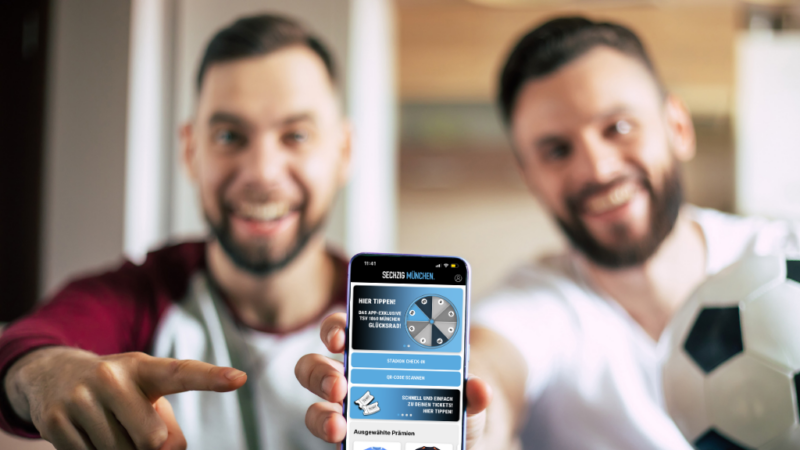



The sports retail industry is undergoing a period of rapid change, shaped by new trends and challenges. David Tews, former Head of International Marketing at Hervis, shared exclusive insights into Hervis’s strategy with us on the “hello again” podcast.
He explains how a major player like Hervis is dealing with the current changes, what role digital customer loyalty and the Hervis app developed in-house the factors at play and how the company is operating successfully despite the current challenging market conditions.
Hervis in the sporting goods industry: Figures and Positioning
Hervis is a well-known name in the sports retail sector: How large are you exactly and what makes Hervis so special?
David Tews: „Hervis is a sports retailer with around 250 stores in five countries and a turnover of approximately 500 million euros. What distinguishes us is that we are a directly managed company – in contrast to many cooperatively organized competitors.
This definitely brings us advantages in some places short decision-making processes “And we can implement key decisions quickly. We’ve been in the market for 55 years now, and in recent years we’ve deliberately positioned ourselves outside the discount segment in order to elevate the brand’s image."
Challenges in the Sports Retail Industry: Inflation, Travel Trends, and Market Consolidation
The sports retail sector is currently experiencing turbulent times. Where do you see the biggest challenges right now and how have you adapted your strategy?
David Tews: „The market is facing major challenges right now. During the pandemic, there was a veritable peak in sports retailas many people did sports outdoors. Now we are massively feeling the trend towards the travel industry
The people are investing in vacations again instead of the next piece of sports equipment.
This leads to a certain Market Saturation and Market Corrections. “We have to carefully evaluate our locations, including in terms of price points. The whole issue of inflation, energy costs, and interest rates has meant that people have less money to spend and are thinking very carefully about what they spend it on.”
Customer Behavior at Hervis: Purchase Frequency and Shopping Cart
Speaking of customer behavior: How often does an Hervis customer visit on average, and what does the typical shopping cart look like?
David Tews: „In Austria, this is something special because we also have the bicycle trade in that. Shopping carts naturally increased. But let's take that out, comes a buying customer per year three to seven times to us.
Many are around two to three times, as it often seasonal purchases are. Our months with the highest turnover and the highest shopping carts are winter, i.e. November, December and January, as items such as ski jackets are naturally more expensive than a tracksuit in summer. On average, the shopping carts in the sports retail sector are between 80 and 160 euros.“
| Key figure | Value at Hervis |
|---|---|
| Stores | about 250 in 5 countries |
| Annual Revenue | approx. 500 million euros |
| Frequency of purchases per customer per year | 2–7 times (excluding bicycle sales) |
| Average Shopping Cart | 80–160 € |
| Revenue Share from Loyalty Program | high double-digit percentage range |
| Level of Digital Adoption Among Club Members | 100 % (1.3 million members) |
Nowadays, I send a weekly message to customers through the app. Of course, that wasn't possible on this scale back then.
David Tews, Head of International Marketing at Hervis
From a card system to an app: The Digital Transformation of the Hervis Sports Club
You have been running the Hervis Sports Club for over 20 years and recently switched from a card-based system to an app. What was the reason for this step and how did the conversion go?
David Tews: „The Hervis Sports Club is absolutely essential to us. We generate high double-digit revenue—that is, over 20 %—from our loyalty program. We completely... two and a half years ago switched to the app. The main reason was digitization. We no longer wanted to produce and mail plastic cards because it was too costly.
We've also adjusted our bonus system: Previously, cashback was available from a certain minimum turnover. Now collect points from the first Euro, which they can redeem at any time. This is a great advantage and makes our communication much faster.
The transition was a huge step and also involved some risk, since we canceled our subscription to the old system. But we believed in the club and knew that our customers were loyal. We notified all of our customers and helped them switch to the app.
That Staff in the branches have been extensively trained, and we conducted an international campaign. The result is impressive: 100 % unserer 1,3 Millionen Club-Mitglieder sind jetzt digital 100% of our 1.3 million club members are now digital. Only about 25% have enabled push notifications, but Email is a very strong channel “for us."
Conclusion: Digitalization as a Competitive Advantage
Hervis demonstrates how an established sporting goods retailer can focus on customer loyalty even during economically challenging times: through a systematic transition from a card system to an app, a fair points system that starts with the very first euro, and a club digitization rate of 100 %. The result is a loyalty program that generates a high double-digit percentage of total revenue and demonstrates that digital customer loyalty is sustainable even during turbulent market conditions.
FAQ: Frequently Asked Questions About Hervis and Digital Customer Loyalty in the Sports Retail Industry
How big is Hervis as a sporting goods retailer?
Hervis operates approximately 250 stores in five countries and generates annual revenue of about 500 million euros. As a directly managed company, Hervis differs from many of its cooperatively organized competitors in the sporting goods retail sector.
On average, how often do Hervis customers make a purchase?
Excluding bicycle sales, a customer visits Hervis about three to seven times a year; many make two or three purchases. The average shopping cart total ranges from 80 to 160 euros, and is particularly high during the winter months.
Why did Hervis switch from a card system to an app?
The main reason was digitization: Hervis no longer wanted to produce and mail expensive plastic cards. At the same time, the rewards program was made fairer, since customers can now earn points starting with their very first euro, rather than having to reach a minimum spending threshold to receive cashback.
To what extent has the Hervis Sports Club been digitized?
100 % of the 1.3 million club members now use the digital app. About 25 % of them have also enabled push notifications, while email remains a particularly strong communication channel.
What percentage of Hervis's revenue comes from the loyalty program?
The Hervis Sports Club accounts for a high double-digit percentage—that is, over 20 %—of total revenue. This makes the program one of the most important components of Hervis’s overall business strategy.